

Imagine downloading a government app, getting $30 for free, and being told you can pay your grocery bill with Bitcoin. That was the promise in El Salvador back in 2021. It was supposed to be the future of money-fast, cheap, and accessible to everyone. Fast forward to August 2026, and that experiment looks very different. The Chivo wallet is still around, but the rules have changed drastically. Bitcoin is no longer legal tender. The International Monetary Fund (IMF) stepped in, and the country has had to unwind its public sector involvement in crypto.
If you are wondering what actually happened to this bold financial experiment, you are not alone. Many people heard about the hype but missed the messy middle part where technical glitches, security fears, and massive price swings collided. Today, we are looking at the real story behind the Chivo wallet, why the government pulled back, and what it means for everyday Salvadorans now that the mandatory Bitcoin era is over.
The Bold Beginning: Why El Salvador Went All-In on Bitcoin
To understand where things stand today, we have to look at why they started. In September 2021, President Nayib Bukele announced that El Salvador would become the first country in the world to accept Bitcoin as legal tender alongside the US Dollar. This wasn't just a political stunt; it was aimed at solving a real problem. About 70% of Salvadorans did not have bank accounts. They relied heavily on remittances-money sent home by relatives living abroad-which made up nearly 20% of the country's GDP.
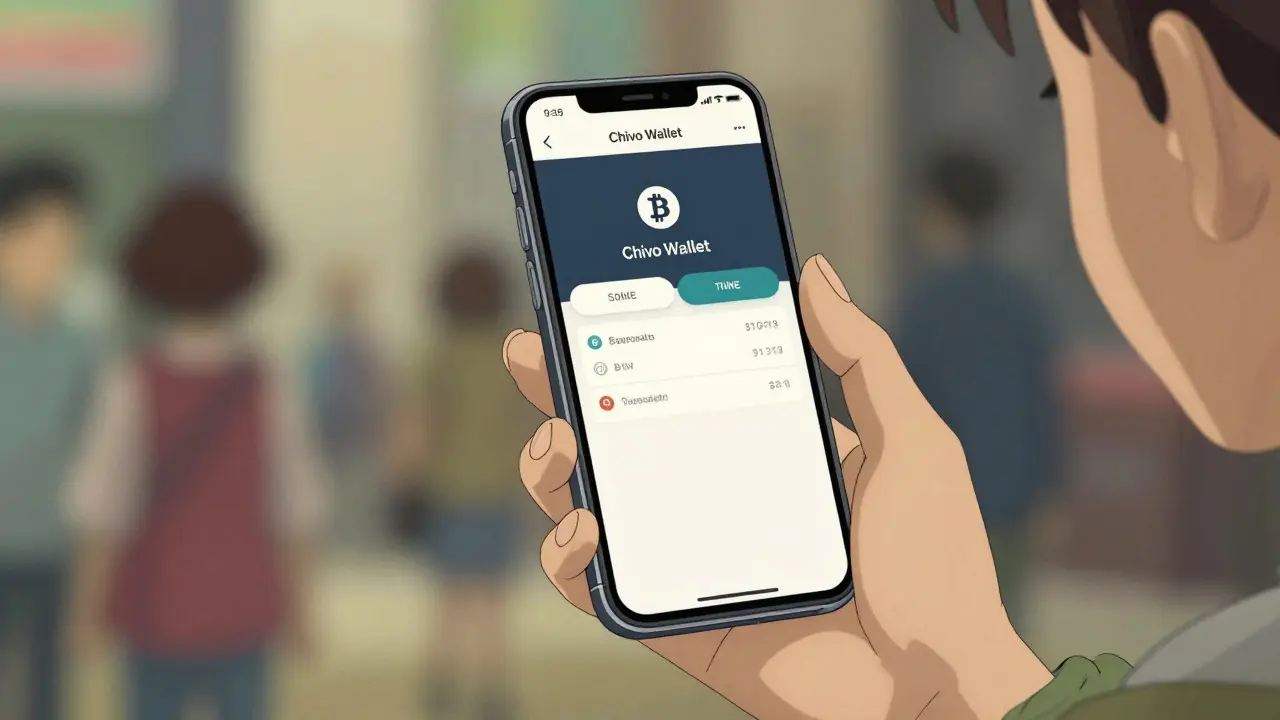
Sending money through traditional services like Western Union or MoneyGram was expensive. Fees could eat up a huge chunk of small transfers. The idea was simple: use Bitcoin to cut those fees to zero. To make this happen, the government launched the Chivo wallet is the official digital wallet developed by AlphaPoint for Bitcoin and USD transactions. At launch, the government deposited $30 into every new user's account. It was a massive incentive. Within days, nearly half the population had downloaded the app. It seemed like a revolution.
But there was a catch. Most people didn't really understand how Bitcoin worked. They saw the $30 bonus, but they didn't see the volatility coming. When Bitcoin’s price dropped from nearly $69,000 to around $16,000 in 2022, the value of people's savings in the Chivo wallet plummeted overnight. For someone trying to buy food, that loss hurt more than any fee ever could.
Technical Glitches and Security Nightmares
Even if the price stayed stable, the technology itself struggled. The Chivo app was built to handle millions of users at once, which is a huge engineering challenge. Unfortunately, it wasn't ready. Right after launch, the platform crashed repeatedly. Users couldn't log in, couldn't send money, and sometimes couldn't even check their balances.
Worse than crashes were security issues. There were reports of identity theft and data breaches. People worried that their personal information, linked to their national IDs, was exposed. If you have ever tried to explain to a grandparent why their phone is 'broken' when it's actually a server issue, you know how frustrating this was. Trust is hard to build and easy to break. These early failures created a stigma that followed the wallet for years.
| Feature | Traditional Services (Western Union/MoneyGram) | Chivo Wallet (2021-2024) |
|---|---|---|
| Transaction Fees | High (often 5-10%) | Zero commission for BTC transfers |
| Accessibility | Physical agents required | Smartphone + Internet required |
| Reliability | Highly reliable | Frequent crashes and downtime |
| User Risk | Low (regulated) | High (volatility + security bugs) |
The Turning Point: IMF Pressure and Legal Changes
By 2024, the reality set in. Data showed that eight out of ten Salvadorans were not using Bitcoin regularly. The initial $30 bonus drove downloads, but it didn't drive daily usage. People went back to cash or dollars because they were predictable. Meanwhile, the country needed financial help. The IMF offered a $1.4 billion loan, but it came with strict conditions.
The biggest condition? Remove Bitcoin's status as legal tender. In January 2025, El Salvador officially ended the mandate that businesses must accept Bitcoin. This was a major shift. It meant merchants could refuse Bitcoin payments without breaking the law. The government also agreed to unwind public sector participation in the Chivo wallet by July 2025. Essentially, the state stopped pushing Bitcoin on its employees and citizens.
This decision was controversial. Supporters argued it saved the economy from further instability. Critics said it admitted defeat. But for many ordinary people, it brought relief. They didn't have to worry about their paycheck losing value before they could spend it.

Where Does Chivo Stand in 2026?
So, is the Chivo wallet dead? Not exactly. As of August 2026, the app still exists, but its role has changed. It is no longer the central pillar of national monetary policy. Instead, it operates more like a niche fintech tool. The government still holds a significant amount of Bitcoin-over 6,100 coins worth roughly $500 million-as part of its Strategic Bitcoin Reserve Fund. But this is an investment strategy, not a currency for buying coffee.
The regulatory landscape has also matured. The Digital Assets Issuance Act (LEAD), introduced in 2023, created the National Commission of Digital Assets (CNAD). This body oversees crypto activities, ensuring that private companies operating in El Salvador follow clear rules. This separation between government holdings and private usage is crucial. It allows innovation to continue without forcing the whole country to ride the same volatile wave.
El Salvador is still hosting events like the PLANB Forum, attracting crypto enthusiasts from across Central America. The country wants to remain a hub for digital assets, but on its own terms-not as a forced experiment, but as a choice for those who want to participate.

Lessons Learned for Global Crypto Adoption
The El Salvador experiment taught the world several hard lessons. First, incentives alone don't create habits. Giving people $30 gets them to download an app, but it doesn't teach them how to manage risk. Second, infrastructure matters. A beautiful idea fails if the servers crash every time you try to send money. Third, trust is fragile. Once users lose money due to volatility or feel unsafe due to security breaches, winning them back is incredibly difficult.
For other countries watching, the message is clear. Central Bank Digital Currencies (CBDCs) might be safer because they are backed by stable fiat currencies. Adopting a volatile asset like Bitcoin as national currency exposes the entire economy to global market swings. While Bitcoin has its place in portfolios, making it mandatory for daily transactions is a high-risk gamble.
Today, the focus in El Salvador has shifted from 'mandatory adoption' to 'educational integration.' Schools and community centers offer training on digital literacy and crypto basics. This slower, more organic approach seems more sustainable. People are learning to use these tools voluntarily, understanding both the benefits and the risks.
What This Means for You
If you are outside El Salvador, this story serves as a case study in what happens when technology meets policy too quickly. If you are considering investing in crypto or using digital wallets, remember that convenience often comes with trade-offs. Zero fees sound great, but ask yourself: who is paying for the service? What are the hidden costs, like volatility or security risks?
The Chivo wallet journey shows that innovation is valuable, but stability is essential. For millions of Salvadorans, the return to a dual system of Dollars and optional Bitcoin usage has provided a balance they never had before. They can choose to engage with the future of finance, or stick to the present, without penalty.
Is Bitcoin still legal tender in El Salvador in 2026?
No. As of January 2025, Bitcoin lost its status as legal tender in El Salvador due to conditions set by the IMF. Businesses are no longer legally required to accept Bitcoin for payments, though they may choose to do so voluntarily.
Can I still use the Chivo wallet?
Yes, the Chivo wallet is still operational, but its role has diminished. It is no longer the primary method for government salaries or mandatory transactions. It functions more like a standard crypto-to-fiat exchange app for those who wish to use it.
Why did the IMF force El Salvador to remove Bitcoin's legal tender status?
The IMF cited concerns over financial transparency, volatility risks to the economy, and lack of independent oversight. Removing the legal tender status was a key condition for receiving a $1.4 billion financial assistance program to stabilize the country's finances.
How much Bitcoin does the El Salvador government hold in 2026?
As of March 2025, the government held approximately 6,102 Bitcoin coins, valued at around $500 million. This reserve is managed separately from the general public's use of the Chivo wallet and is treated as a long-term strategic investment.
Did the Chivo wallet improve financial inclusion in El Salvador?
Initially, it increased access to digital accounts for many unbanked citizens. However, sustained usage remained low, with 80% of users not actively trading Bitcoin by 2024. The main barriers were technical glitches, security concerns, and fear of price volatility.





Kat Bennett
August 1, 2026 AT 10:25It is honestly fascinating to look back at how quickly the narrative shifted from utopian promise to pragmatic reality, isn't it? I always thought that if you just gave people enough incentive, they would naturally adopt the new technology, but human behavior is so much more complex than simple economics. The fact that eighty percent of users stopped actively trading by twenty twenty four really highlights that trust is not something you can buy with a thirty dollar bonus. It makes me wonder if we will see similar patterns in other emerging markets trying to leapfrog traditional banking infrastructure. Maybe the lesson here is that financial inclusion requires education first and technology second, rather than the other way around.
Michael Mostyn
August 2, 2026 AT 04:55The philosophical implication of this experiment is profound because it reveals the tension between state power and individual autonomy in the digital age. When a government mandates a currency, it is essentially imposing a specific worldview on its citizens, one that assumes volatility is an acceptable price for innovation. The retreat from legal tender status suggests that the social contract could not withstand the psychological stress of such uncertainty. It raises the question of whether any decentralized asset can ever truly serve as a stable medium of exchange without sacrificing its core ideological purity.
Erica Johnson
August 2, 2026 AT 14:02Typical government overreach lol :/ They forced it on people who didn't want it and then acted surprised when it failed. The IMF was right to step in because letting Bukele gamble with the national economy was irresponsible. People lost money because the app crashed and the price dropped, not because Bitcoin itself is bad. But forcing grandmas to use crypto for groceries? That's just cruel. Glad they finally backed down before it got worse :)
Ken G
August 4, 2026 AT 08:53the imf always controls everything anyway. they wanted to crush bitcoin because it threatens their fiat system. el salvador tried to break free and now they are being punished for it. the chivo wallet was never about helping the poor it was about exposing the weakness of the global banking cartel. wake up sheeple
Nick Darring
August 6, 2026 AT 08:03I mean, everyone says it failed, but did it really fail if the government still holds six thousand bitcoin worth half a billion dollars? That sounds like a pretty good investment strategy to me, especially considering where the price was when they started buying. People complain about the crashes and the glitches, but those are just growing pains for any new technology. You can't expect a brand new app to work perfectly on day one, especially when millions of people are downloading it at once. It's kind of funny how everyone forgets the wins and only focuses on the hiccups. I bet a lot of people are still using it quietly behind the scenes.
Prudence Flemming
August 7, 2026 AT 19:14the paradigm shift here is subtle yet significant. moving from mandatory adoption to voluntary participation aligns better with market fundamentals. the regulatory framework established by cnad provides necessary guardrails while preserving the ethos of decentralization. it is a maturation process for the ecosystem. less hype more substance.
Matt Kay
August 8, 2026 AT 16:05boring article. nothing new here. govts always mess things up. btc is fine just dont make it legal tender. simple.
Dave Kjendal
August 9, 2026 AT 09:40you guys are missing the point entirely. this was a test run for the world. el salvador took the hit so other countries could learn. the real victory is that bitcoin survived the scrutiny. most people think it's dead but it's just evolving. smart money stays quiet. fools rush in.
Candice Cornett
August 10, 2026 AT 03:58it is morally bankrupt to force citizens into a volatile asset class under the guise of financial inclusion. the elites get their tax breaks while the poor lose their savings. typical corruption disguised as innovation. glad the imf stepped in to save them from themselves
Lance Jantz
August 10, 2026 AT 19:14Ah, the tragic beauty of El Salvador's experiment! It was like watching a brilliant artist paint a masterpiece on a canvas made of wet paper-spectacular in its ambition, but doomed by the materials. The Chivo wallet was supposed to be our golden ticket to a borderless future, a shimmering beacon of hope in the dark waters of traditional finance. Instead, it became a cautionary tale wrapped in glitchy code and broken promises. Yet, there is poetry in the failure, don't you think? It shows us that even the boldest dreams must eventually bow to the harsh winds of reality. We are all just passengers on this wild ride, hoping the ship doesn't sink before we reach shore.
Don Fizy
August 12, 2026 AT 05:39Hey folks! Don't let the negativity get you down :) The key takeaway here is that learning happens through trial and error. El Salvador paved the way for better regulations and clearer understanding of crypto risks. It's a win for education! Keep your wallets safe and keep learning! 🚀
Phil Babb
August 12, 2026 AT 16:29LISTEN UP!!! This is exactly why cultural context matters!! You cannot just drop a US-centric tech solution into a developing nation without understanding the local dynamics!!! The remittance culture is sacred!!! Disrespecting that with buggy apps is an insult!!! Wake up people!!!
Dominic Greco
August 13, 2026 AT 04:54They are lying about the numbers 😡😡😡 The IMF is working with the banks to suppress the truth. El Salvador knows too much about the global reset. Follow the money 🤑🤑🤑
Sean Rowland
August 14, 2026 AT 15:46One might argue that the entire premise of 'legal tender' is a construct designed to limit individual sovereignty. By removing the mandate, the state has inadvertently highlighted the artificial nature of monetary policy. It is a fascinating display of bureaucratic maneuvering, albeit one that lacks genuine democratic consent. The jargon-heavy reports from the IMF obscure the simple truth: power seeks to control value.
Sus Sawyer
August 15, 2026 AT 03:46Let's keep it real though. The tech wasn't ready but the vision was solid. Now that the dust has settled, we can actually build proper infrastructure without the political pressure. It's a fresh start for fintech in Central America. Let's support the educators and devs who are doing the heavy lifting now. No cap, this is gonna be huge for financial literacy globally.
Aryan MISHRA
August 16, 2026 AT 17:26The liquidity constraints were inevitable!!! Volatility kills retail adoption!!! CBDCs are the only logical path forward!!! Fiat stability is paramount!!! Do not confuse speculation with utility!!!
Ryan Robinson
August 17, 2026 AT 23:51i think its cool they tried tho. even if it didnt work out perfectly, at least they showed some guts. maybe next time theyll do it better. no need to be so hard on them. progress takes time yknow?
Earl Kott65
August 18, 2026 AT 01:03Oh wow, what a disaster! 🙄 Just kidding, it was kinda awesome to watch them try. The sarcasm is thick here but seriously, imagine having $30 free money. Who wouldn't download it? The fact that it crashed is hilarious but also sad. Let's hope the next country learns from this and builds a better app. Or maybe just stick to cash. 🤷♂️
Ethan Yuwono
August 18, 2026 AT 09:46it is important to remember the human element here. these were real people trying to navigate a confusing new system. the empathy we show towards their struggles should guide future policies. balance is key. neither total freedom nor total control works. finding the middle ground is the true challenge for policymakers everywhere