

The first Bitcoin ever created was never meant to move. It sits in a wallet, visible on every blockchain explorer, worth over a billion dollars at peak prices - but it can’t be spent. Not now. Not ever. This isn’t a glitch. It’s not a mistake. It’s the genesis block, and its 50 BTC reward is permanently locked by design.
What Exactly Is the Genesis Block?
The genesis block is Block 0 - the very first block on the Bitcoin blockchain. It was mined on January 3, 2009, at 18:15:05 UTC by Satoshi Nakamoto. Unlike every other block that comes after it, the genesis block doesn’t point to a previous block. There is no parent. No history before it. It’s the starting line.Inside this block is a coinbase transaction that awards 50 BTC to the address 1A1zP1eP5QGefi2DMPTfTL5SLmv7DivfNa. You can look it up on any blockchain explorer. The coins are there. But try to spend them? The network will refuse. Every node, every miner, every wallet - they all know this transaction is invalid for spending. Why? Because the Bitcoin software was written to treat it that way.
Why Can’t It Be Spent? The Code Says So
It’s not about missing private keys. It’s not about lost wallets. It’s not even about Satoshi never having access to the coins. The reason is simpler and more technical: the Bitcoin protocol explicitly excludes the genesis block’s output from being spendable.In the Bitcoin Core source code, there’s a hardcoded exception. When a node checks if a transaction is valid, it runs through a list of rules. One of those rules says: "If this transaction comes from the genesis block, ignore it. Don’t allow any spending from it." This isn’t a bug. It’s a deliberate line of code. Developers who’ve looked into the Bitcoin codebase - like those working on Bitcoin Core - confirm this. Gavin Andresen, a former lead Bitcoin developer, said as much back in 2010 on the Bitcointalk forum: "The genesis block is hardcoded and treated specially in the code."
There’s no way around it. Even if someone somehow got the private key to that address - which no one has ever proven exists - the network would still reject any transaction trying to move those 50 BTC. The rule is built into the consensus. It’s not something you can override with a new wallet or a fork. It’s baked into the foundation.
The Hidden Message in the Genesis Block
The genesis block isn’t just code. It’s a statement. Buried inside its data is a headline from The Times of London: "Chancellor on brink of second bailout for banks." It was published on January 3, 2009 - the same day the block was mined.This wasn’t random. It was a protest. A timestamp. A message to anyone who would look. Bitcoin was built as an alternative to a financial system that had just collapsed. The 2008 crisis led to banks being bailed out with taxpayer money. Satoshi didn’t trust that system. So they created something that didn’t need banks, governments, or central authorities.
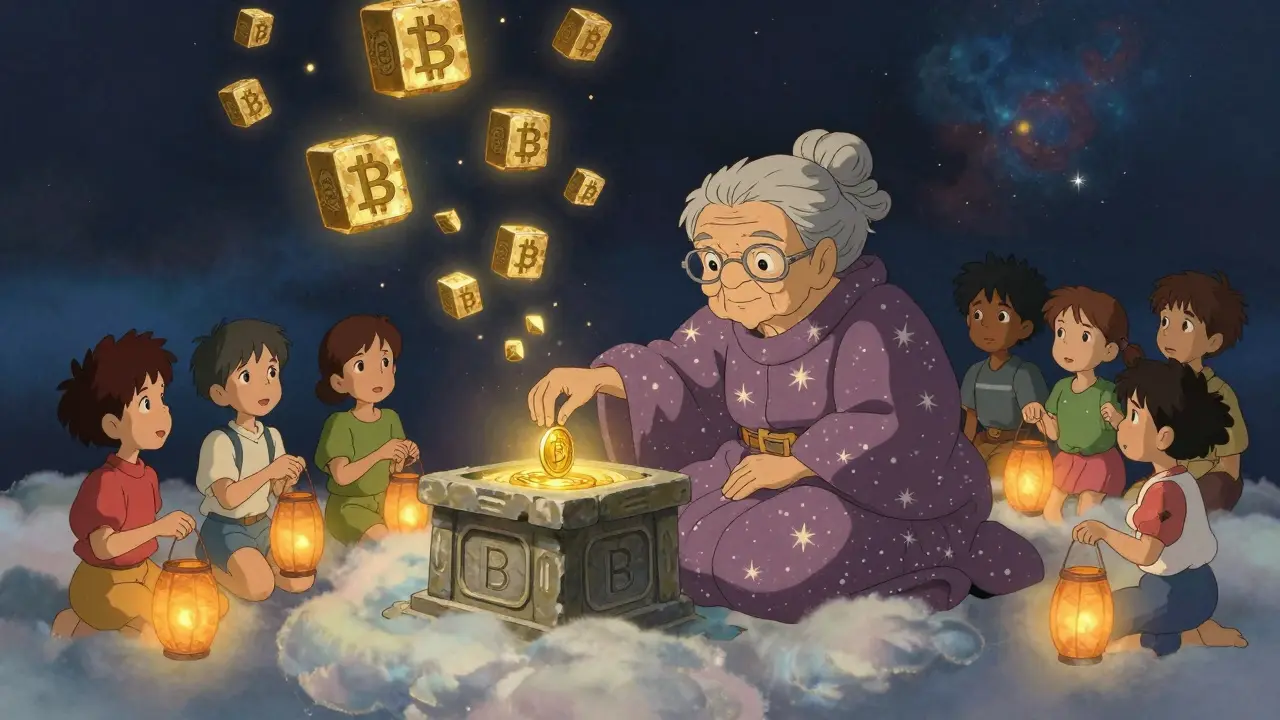
The unspendable reward ties into that message. The first coins weren’t meant to be used. They weren’t meant to be traded or hoarded. They were meant to be a monument. A digital cornerstone. A reminder that Bitcoin didn’t start as a currency - it started as a rebellion.

Was It Intentional? The Great Satoshi Mystery
No one knows for sure if Satoshi meant to make the reward unspendable. Some think it was a coding oversight. Maybe they didn’t realize the coinbase transaction in the first block wouldn’t be valid. Others believe it was intentional - a symbolic act.Andreas M. Antonopoulos, a well-known Bitcoin educator, calls it a "digital monument." He argues that leaving the coins untouched makes them sacred. They’re not money. They’re history.
Dr. Craig Wright, who claims to be Satoshi, has said the unspendable nature was deliberate. But without proof, his claims mean little. Academic researchers like Dr. Sarah Meiklejohn from University College London have studied the genesis block as a case in how protocol rules can become permanent cultural artifacts. She notes that the fact the coins can’t be moved makes them more valuable as a symbol than as currency.
On Reddit and Bitcoin forums, users have debated this for over a decade. One popular comment reads: "It’s beautiful that the first Bitcoin will never move - it’s like the cornerstone of a building that’s never meant to be removed."
What Does This Mean for Bitcoin’s Supply?
Bitcoin’s total supply is capped at 21 million coins. But technically, it’s 20,999,999.9769 BTC. Why? Because the 50 BTC from the genesis block can’t be spent - so they’re effectively removed from circulation.Does this matter? No. Not really. The difference is less than 0.00001% of the total supply. No economist, miner, or investor has ever lost sleep over it. But it’s a quiet footnote in Bitcoin’s history. A tiny glitch in an otherwise perfect system.
Some analysts, like Willy Woo, point out that this unspendable reward reinforces Bitcoin’s deflationary nature. Even the first coins were never meant to be part of the economy. They were a seed. A beginning. Not a resource to be spent.
How Do Developers Handle the Genesis Block?
If you’re building a Bitcoin fork - like Litecoin, Bitcoin Cash, or any other altcoin - you have to copy the genesis block exactly. Or change it entirely. You can’t just tweak it. The genesis block is the anchor. Everything else builds on it.Bitcoin Core’s source code includes a file called chainparams.cpp that defines the genesis block’s hash, timestamp, nonce, and reward. If you change any of those values, you’re no longer on the Bitcoin blockchain. You’ve created a new chain. That’s why every Bitcoin fork starts with a new genesis block - even if it’s almost identical.
Developers working on Bitcoin wallets or blockchain explorers have to account for this exception. Most tools show the genesis block reward as "unspendable" with a warning. It’s not a bug. It’s a feature.
Why Does This Still Matter Today?
Bitcoin is now worth hundreds of billions. Millions of people use it. Trillions of dollars flow through its network. And yet, the first 50 coins sit untouched.That’s the point.
The genesis block reminds us that Bitcoin wasn’t created to make money. It was created to solve a problem - the problem of trust. The problem of centralized control. The problem of banks being too big to fail.
Those 50 BTC aren’t just coins. They’re a relic. A digital fossil. The original proof that Bitcoin works. No one can move them. No one needs to. They’ve already done their job.
Every time someone mines a new block, they’re building on top of that first block. The reward changes. The difficulty adjusts. The network grows. But the genesis block stays the same. Frozen. Perfect. Unchanged since January 3, 2009.
It’s not a flaw. It’s a feature. And it’s here to stay.
Will It Ever Change?
No. Not unless Bitcoin itself dies.Any attempt to alter the genesis block - to make those 50 BTC spendable - would break the entire blockchain. Every node on the network would reject it. You’d create a new chain. A different Bitcoin. A copy. A fake.
The Bitcoin Improvement Proposal (BIP) process has never once considered changing the genesis block. Not in 15 years. Not even during the most heated debates over block size or SegWit. The genesis block is untouchable. And that’s how it should be.
As Nic Carter said in a 2023 CoinDesk interview: "The unspendable genesis coins will become even more mythologized as Bitcoin matures and the block subsidy diminishes."
By the time Bitcoin stops issuing new coins around 2140, the genesis block will be the oldest artifact in the entire system. And it will still be unspendable.
Can you spend the 50 BTC from the Bitcoin genesis block?
No, you cannot spend the 50 BTC from the genesis block. The Bitcoin protocol explicitly disables spending from this transaction. Even if someone had the private key, the network’s consensus rules would reject any attempt to move those coins. It’s a hardcoded rule in Bitcoin Core, not a technical limitation.
Why was the genesis block reward made unspendable?
It’s unclear if it was intentional or accidental. Some believe Satoshi did it to make the first Bitcoin a permanent monument to Bitcoin’s creation. Others think it was an oversight in early code. Either way, the network treats it as unspendable by design, and no changes have been proposed to alter this.
Does the unspendable genesis block affect Bitcoin’s supply?
Technically, yes - Bitcoin’s total supply is 20,999,999.9769 BTC instead of exactly 21 million. But this difference is negligible. It has no practical impact on inflation, mining rewards, or market value. The 50 BTC are effectively removed from circulation, but their absence doesn’t change how Bitcoin functions.
Is the address for the genesis block reward still active?
The address 1A1zP1eP5QGefi2DMPTfTL5SLmv7DivfNa is visible on blockchain explorers and shows the 50 BTC balance. But no transaction has ever been sent from it. It’s not "active" in the sense of being used. It’s a static record - a historical artifact, not a wallet you can interact with.
Could a hard fork make the genesis block reward spendable?
Yes, but only on a new blockchain. If you changed the genesis block’s rules in a fork, you’d create a new coin - not Bitcoin. The original Bitcoin network would never accept such a change. The genesis block is the foundation of consensus. Altering it breaks the chain’s integrity.
What’s the significance of the newspaper headline in the genesis block?
The headline - "Chancellor on brink of second bailout for banks" - was published in The Times on January 3, 2009. It’s a timestamp proving the block was created after that date. More importantly, it’s a political statement: Bitcoin was created as a response to the 2008 financial crisis and the failure of traditional banking systems.




Alison Fenske
December 22, 2025 AT 22:16It's the first note in a symphony that never repeats. The original ink on the scroll. We don't need to touch it. We just need to know it's there.
Tyler Porter
December 22, 2025 AT 22:39Luke Steven
December 23, 2025 AT 10:36It's the first zero in a sequence that never ends. We're all just counting up from it.
Ellen Sales
December 24, 2025 AT 08:53Vijay n
December 24, 2025 AT 10:06Earlene Dollie
December 25, 2025 AT 04:13Dusty Rogers
December 25, 2025 AT 22:27Kevin Karpiak
December 25, 2025 AT 22:43Amit Kumar
December 27, 2025 AT 17:52And yes, I know the address. I check it every full moon.
chris yusunas
December 27, 2025 AT 22:10Mmathapelo Ndlovu
December 29, 2025 AT 00:16Jordan Renaud
December 29, 2025 AT 05:03roxanne nott
December 30, 2025 AT 05:14Rachel McDonald
December 30, 2025 AT 22:37