
Pakistan Crypto Mining Calculator
How much can you mine?
Calculate Bitcoin mining potential using Pakistan's electricity rates (23-24 PKR/kWh = $0.08 USD).
Estimated Output
Pakistan Electricity RatesKey Assumptions
- Electricity rate: 23-24 PKR/kWh ($0.08 USD)
- Power consumption: 1 TH/s = 300 kWh/day
- Mining efficiency: 50% (real-world operational efficiency)
- Current Bitcoin price: $60,000 (adjust in calculator)
Pakistan just gave 2,000 megawatts of electricity to crypto mining - and no one saw it coming.
In May 2025, Pakistan announced it would dedicate 2,000 MW of its surplus electricity to Bitcoin mining and AI data centers. That’s not a small number. It’s more than the entire power output of some small countries. And it’s happening in a nation where rolling blackouts used to be common, where factories shut down because the grid couldn’t handle demand, and where power plants sat idle at just 15% capacity.
This isn’t a loophole. It’s policy. The government, through the newly formed Pakistan Crypto Council (PCC), is openly encouraging crypto mining as a way to turn wasted energy into cash. They’re not just allowing it - they’re building infrastructure for it. And they’re doing it while the IMF is raising eyebrows.
Why Pakistan has so much surplus power
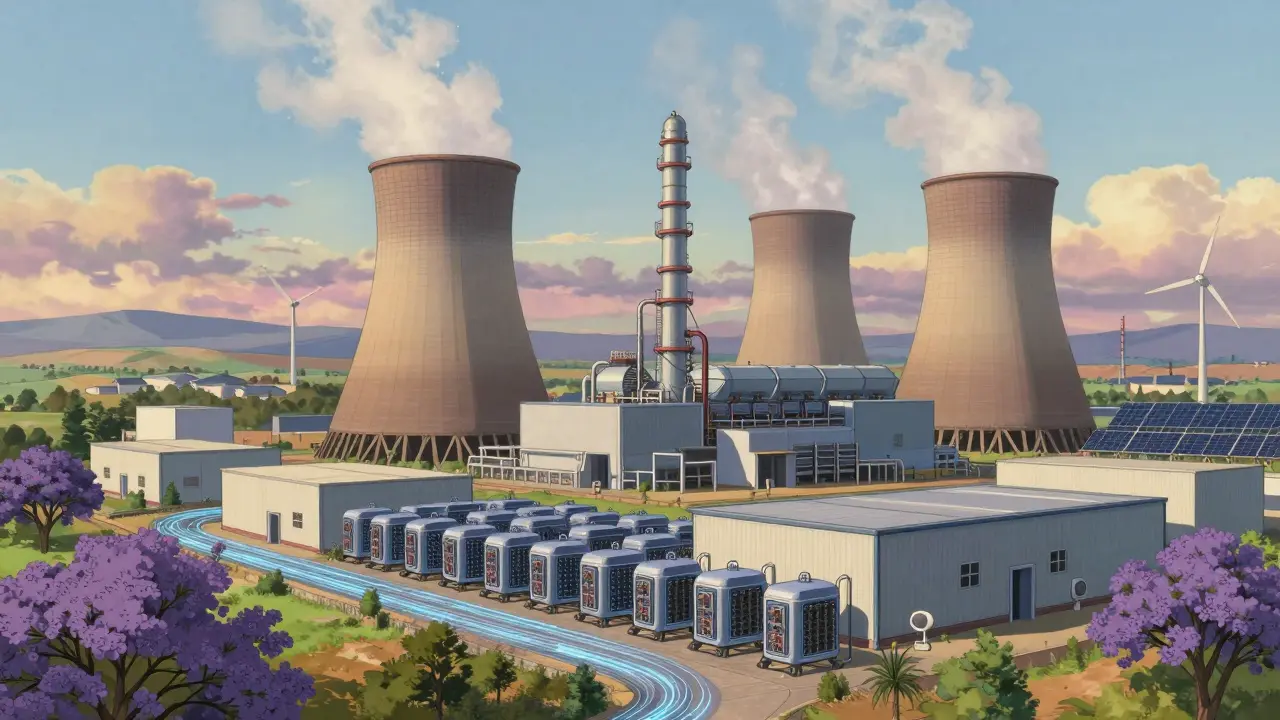
Pakistan generates about 27,000 MW of electricity, but only uses around 20,000 MW on average. That leaves 7,000 MW sitting unused - mostly from coal plants that were built to meet future demand that never came. These plants are expensive to run, and without enough customers, they’re losing money. Every hour they sit idle, Pakistan loses about 2.8 trillion Pakistani rupees a year in wasted potential.
Enter crypto mining. Bitcoin miners don’t care if it’s day or night. They don’t need sunlight or human operators. They just need steady, cheap power. And Pakistan has it - in massive amounts. The 2,000 MW allocated is nearly 30% of that surplus. That’s not a drop in the bucket. It’s a flood.
The numbers behind the deal
Here’s what 2,000 MW means in real terms:
- At current Bitcoin prices, this setup could mine up to 17,000 BTC per year.
- That’s worth roughly $1.8 billion annually.
- The electricity rate for miners is set at 23-24 Pakistani rupees per kWh - about $0.08. That’s half the average cost in Texas and far below Europe’s $0.15+ rates.
- For comparison, the global average for mining electricity is $0.03-$0.15 per kWh. Pakistan’s rate sits comfortably in the sweet spot: cheap enough to profit, but not so low it’s seen as a giveaway.
That’s not a subsidy. It’s a business model. The government isn’t giving away power - it’s selling it at a price that covers maintenance and turns dead assets into revenue. The coal plants that were losing money are now running at 50-60% capacity. That’s a win.
Who’s running the show?
The Pakistan Crypto Council (PCC) is the engine behind this. Created in March 2025 under Finance Minister Muhammad Aurangzeb and Special Assistant to the Prime Minister Bilal Bin Saqib, the PCC isn’t just a talking shop. It’s coordinating with power utilities, international mining firms, and tech companies to get hardware on the ground.
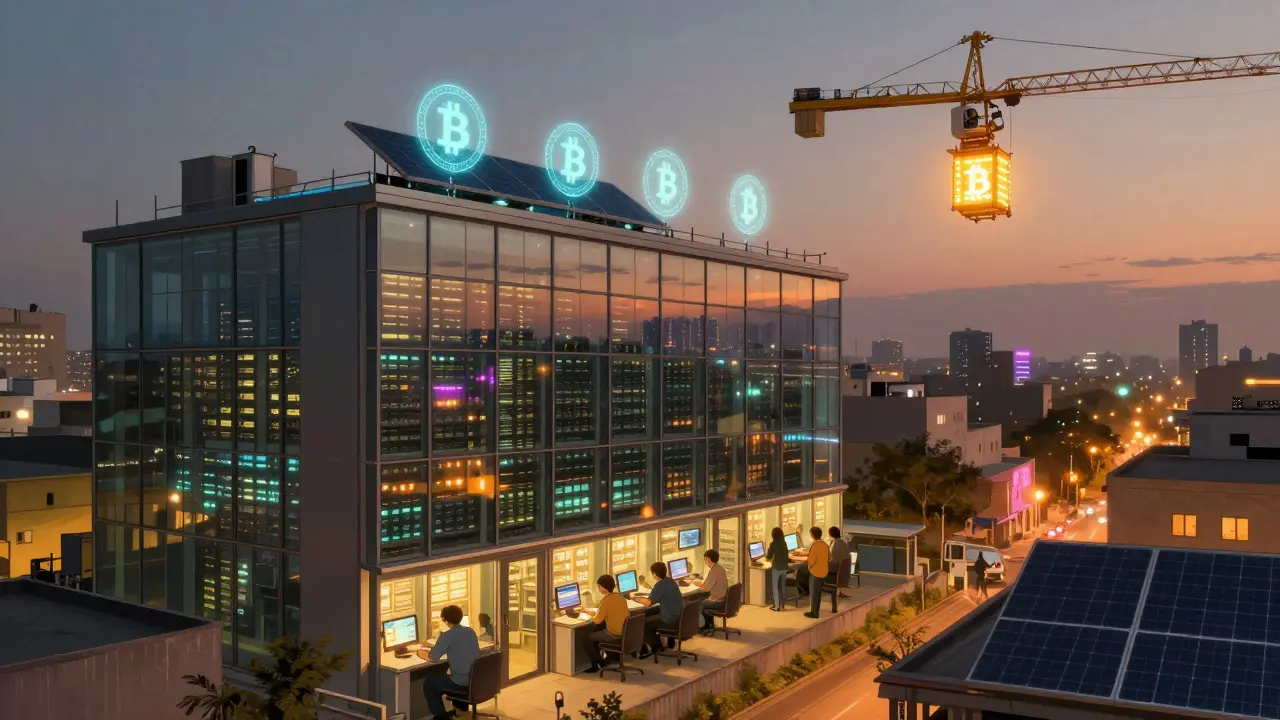
They’ve already got 22 existing data centers in Lahore, Karachi, and Islamabad - operated by companies like PTCL, Multinet, and Cybernet. These aren’t new builds. They’re being retrofitted. Solar projects are being added too. The University of Turbat launched a 1MW solar-powered data center back in 2023. That’s a hint: Pakistan isn’t just using coal. It’s building a hybrid grid.
And then there’s Changpeng Zhao. Yes, that CZ - co-founder of Binance. He’s now a strategic adviser to the PCC. His involvement isn’t symbolic. It means major exchange infrastructure, liquidity, and global credibility are now tied to Pakistan’s success.
Why the IMF is worried
Not everyone is cheering. The International Monetary Fund (IMF) has called the electricity subsidy a “distortion.” They’re worried about fairness. If miners get $0.08/kWh, what about factories? Hospitals? Households? The IMF argues that subsidies like this have failed before - like when Pakistan gave cheap power to textile mills and ended up with no revenue and no reform.
But here’s the twist: Pakistan isn’t offering a blanket subsidy. They’re offering a contracted rate for a specific use case: energy-intensive tech infrastructure. The PCC says miners will pay upfront for grid upgrades and will be subject to real-time pricing if demand spikes. The IMF hasn’t blocked the plan - they’re still in talks. That’s not a no. It’s a “show us the plan.”
And Pakistan is responding. They’ve introduced their first-ever national cryptocurrency policy in April 2025. It includes KYC rules, licensing for exchanges, and compliance with FATF standards. They’re not just mining Bitcoin. They’re building a legal digital economy.
How this changes the global mining map
Before 2021, China mined 70% of Bitcoin. After the ban, miners scattered to Kazakhstan, the U.S., and Russia. But those places are crowded. Power is tight. Taxes are rising. In Texas, miners fight with homeowners over grid strain. In Kazakhstan, electricity prices jumped 40% in 2024.
Pakistan is different. It’s not competing for power - it’s using excess. It’s not in a power crisis - it’s solving one. And it’s positioned as a digital bridge between Asia, Europe, and the Middle East. Fiber optic cables are already being laid. Data centers are being built with redundancy, cooling, and security in mind.
This isn’t just about Bitcoin. It’s about AI. The same 2,000 MW will power AI training clusters. That’s a $500 billion market by 2030. Pakistan isn’t just mining coins - it’s training models, hosting cloud services, and attracting global tech firms.
What’s next? The road ahead
Phase 1 is 2,000 MW. Phase 2? Possibly 5,000 MW. The government has already unveiled its first strategic Bitcoin reserve - not for speculation, but as a national asset. They’re buying and holding BTC as a hedge against currency volatility.
But challenges remain. Grid stability is one. Mining rigs run 24/7. Can the grid handle that without blackouts? Pakistan’s power authority says yes - with smart load balancing and real-time monitoring. They’re working with Siemens and other tech partners to install AI-driven grid controls.
Then there’s regulation. Pakistan needs to prove it’s not a money laundering hub. So far, they’re ahead of the curve. Licensing, traceability, and FATF compliance are baked into the system. They’re not hiding. They’re advertising.
And the world is watching. Countries like Nigeria, Egypt, and Indonesia are already asking for briefings. If Pakistan pulls this off, it won’t just be a mining hub - it’ll be a blueprint for other nations with surplus power and economic pressure.
Can it really work?
Yes - if they stick to the plan. The electricity isn’t free. Miners pay for it. The government isn’t giving handouts - it’s monetizing waste. The IMF isn’t shutting it down - it’s negotiating. The miners aren’t fly-by-night operators - they’re signing multi-year contracts with real capital.
This isn’t a gamble. It’s a calculation. Pakistan had a problem: idle power plants costing billions. Now, they have a solution: a global demand for cheap energy. They didn’t wait for permission. They built the bridge.
If you’re wondering whether this is a bubble - look at the data. 17,000 BTC a year isn’t hype. It’s math. $1.8 billion in revenue isn’t fantasy. It’s a ledger. And the fact that Binance’s founder is advising them? That’s not luck. That’s confidence.
Pakistan didn’t become a crypto powerhouse by accident. They looked at their surplus, their debt, their youth, and their need for jobs - and they chose innovation over fear.





Lore Vanvliet
December 5, 2025 AT 11:31Scott Sơn
December 7, 2025 AT 04:09Frank Cronin
December 8, 2025 AT 01:48Nicole Parker
December 9, 2025 AT 07:52Cristal Consulting
December 10, 2025 AT 22:41Elizabeth Miranda
December 11, 2025 AT 09:10Annette LeRoux
December 13, 2025 AT 06:20Jerry Perisho
December 13, 2025 AT 07:03Manish Yadav
December 14, 2025 AT 15:27Krista Hewes
December 14, 2025 AT 16:05Noriko Robinson
December 14, 2025 AT 18:59Mairead Stiùbhart
December 16, 2025 AT 09:01Doreen Ochodo
December 16, 2025 AT 14:37Yzak victor
December 17, 2025 AT 06:50Holly Cute
December 17, 2025 AT 22:31Josh Rivera
December 18, 2025 AT 05:32Neal Schechter
December 19, 2025 AT 17:49Madison Agado
December 19, 2025 AT 19:30Tisha Berg
December 20, 2025 AT 16:35Frank Cronin
December 21, 2025 AT 02:40