
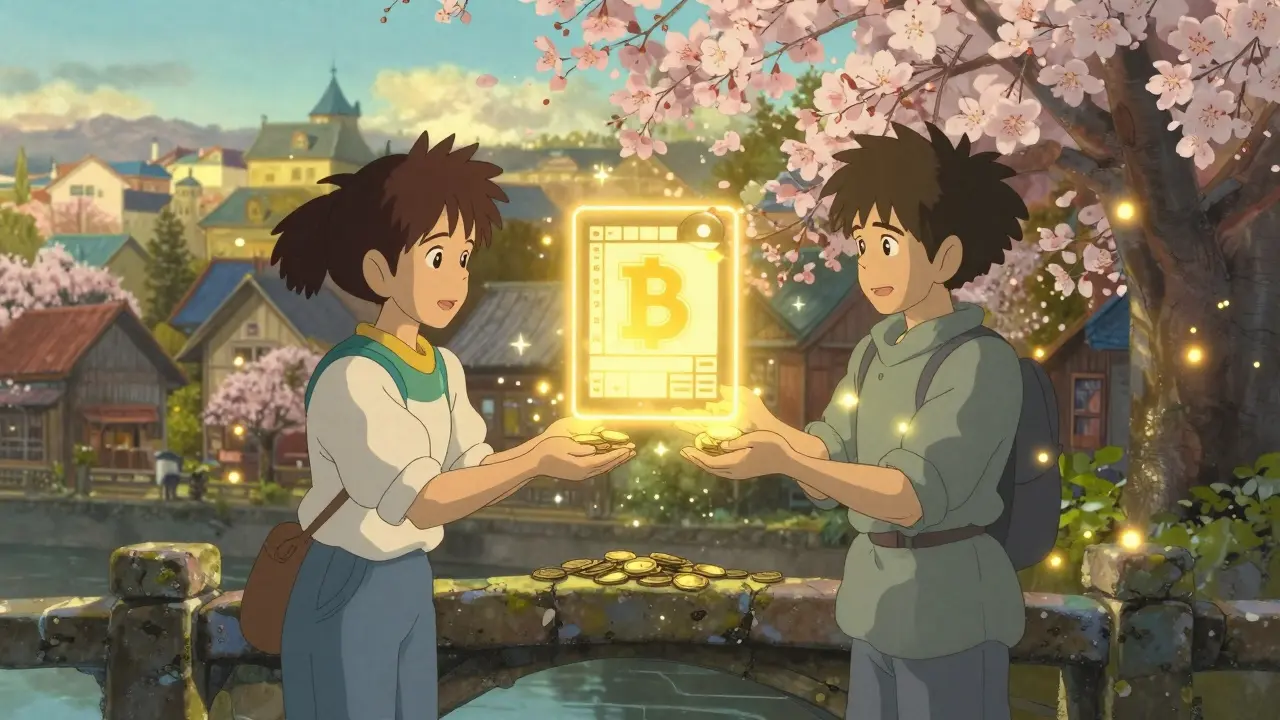
Think about the last time you sent money overseas. It probably took days. You paid fees that felt unfair. And somewhere in between, a handful of banks, clearinghouses, and payment processors took their cut. Now imagine that same transfer happening in under a minute, for less than a dollar, with no bank in the middle. That’s not science fiction. That’s what blockchain does-removing middlemen from transactions.
For decades, middlemen were the glue holding systems together. Banks verified payments. Lawyers held escrow. Record labels tracked music royalties. Ad platforms bought and sold your attention. They made money because they controlled trust. Blockchain says: we don’t need you anymore. Not because it’s perfect, but because it’s different. It lets people trust each other directly-not through institutions, but through code.
How Blockchain Replaces Trust With Code
Before blockchain, trust meant paperwork, signatures, and third parties. You trusted your bank because it had vaults, auditors, and regulators. Blockchain replaces that with math. Every transaction is recorded on a public, unchangeable ledger. No single company owns it. Thousands of computers around the world verify each one. If someone tries to cheat, the network rejects it.
The first real example? Bitcoin. In 2009, Satoshi Nakamoto sent the first Bitcoin to Hal Finney. No bank. No PayPal. Just two people exchanging value using a shared rulebook. That’s the core idea: peer-to-peer. You don’t need a middleman to confirm you paid someone. The network does it for you.
Ethereum took this further in 2015. Instead of just sending money, it let people write rules directly into the blockchain. These are called smart contracts. If you rent an apartment, the contract can automatically release the keys once payment is received. No landlord. No property manager. No escrow service. Just code doing the job.
Where Middlemen Are Disappearing Right Now
It’s not theoretical. Real industries are changing.
Cross-border payments: Sending money from the U.S. to Nigeria used to cost 7% and take 3-5 days. Now, with blockchain platforms like Ripple or Stellar, it costs under 1% and finishes in seconds. The World Bank reports that traditional systems add $1.6 trillion in annual costs just from middlemen fees and delays.
Digital advertising: Google and Facebook take 20-35% of every ad dollar. They decide who sees your ad, how much you pay, and when. Blockchain-based ad networks like Basic Attention Token (BAT) let advertisers pay publishers directly. No middleman. No tracking. Users even get paid in crypto for viewing ads. Advertisers report 30-45% higher ROI because they’re not paying platform taxes.
Music royalties: A song streamed 100,000 times on Spotify might take 18 months to pay the artist. Why? Seven intermediaries-distributors, labels, collecting societies, banks-each take a cut and delay payment. Platforms like Tune.fm use blockchain to pay artists within 24 hours. One indie musician earned $2,300 from 47,000 streams in March 2023. On Spotify, the same streams paid $800.
Supply chains: A shipment of coffee beans from Colombia to Germany passes through 12+ parties: exporters, freighters, customs, insurers, retailers. Each adds paperwork, delays, and cost. IBM’s Food Trust blockchain cuts documentation time by 40%. Every scan of a QR code shows the full history-where it was grown, when it shipped, who handled it. No more lost paperwork. No more blame games.

Why It’s Not Always Better
Removing middlemen sounds great. But it doesn’t always work.
First, complexity shifts. When a bank disappears, the responsibility doesn’t vanish-it lands on you. If you lose your private key? Your money is gone forever. Over 3.7 million ETH has been lost this way. No customer service line. No reset button.
Second, new middlemen appear. Companies like MetaMask and Coinbase aren’t banks-but they act like them. They hold your keys. They charge fees. They freeze accounts. They’re not the old middlemen, but they’re still in the way. Gartner calls this the "middleman paradox"-you kill one layer, and another rises to manage the chaos.
Third, some jobs can’t be automated. A smart contract can’t decide if a product was damaged in transit. It can’t negotiate a refund. It can’t interpret a contract clause. That still needs humans. JPMorgan’s JPM Coin isn’t replacing banks-it’s making them faster. Banks aren’t dying. They’re adapting.
And then there’s regulation. 87 countries still don’t know how to classify blockchain. In the EU, MiCA rules come into force in 2024. In the U.S., it’s a patchwork of agencies. Without clear rules, adoption slows.
What You Need to Get Started
If you want to use blockchain to cut out middlemen, here’s how to begin:
- Get a wallet: MetaMask (for browsers) or Trust Wallet (for phones). This is your digital key to the blockchain.
- Understand gas fees: Every transaction costs a small fee (paid in ETH or other crypto). As of Q2 2023, Ethereum gas averaged $0.42 per transaction. On cheaper chains like Polygon, it’s less than a penny.
- Try a dApp: Go to a decentralized app like Uniswap (for trading crypto) or Audius (for music). You don’t need to sign up. Just connect your wallet.
- Learn the risks: Transactions are final. If you send funds to the wrong address? There’s no undo. Double-check everything.
Most people need 80-120 hours of learning to feel confident. ConsenSys Academy’s 2023 data shows that non-technical users who spend that time can navigate blockchain tools as easily as online banking.
The Future Isn’t No Middlemen-It’s Better Middlemen
Blockchain won’t erase all intermediaries. But it will force them to change.
Instead of being gatekeepers, they’ll become validators. Instead of charging 5% to process a payment, they’ll charge 0.1% to verify it. Instead of owning your data, they’ll protect it.
The World Economic Forum predicts that by 2027, 10% of global GDP will be stored on blockchain. But that doesn’t mean banks are gone. It means they’ll be leaner, faster, and more transparent.
Think of it like the shift from landlines to smartphones. The phone company didn’t disappear. It just stopped being the only way to connect. Blockchain is doing the same. It’s not about removing people-it’s about removing unnecessary, slow, expensive layers.
The real win? When you can send money, sell music, track goods, or run ads without paying 10 people to stand between you and the outcome. That’s the power of removing middlemen-not because it’s trendy, but because it’s finally possible.
Can blockchain completely eliminate all middlemen?
No. Blockchain removes intermediaries that exist to verify, record, or facilitate transactions-but not those that handle human judgment, legal interpretation, or customer service. For example, while a smart contract can automatically release payment after delivery, it can’t resolve a dispute over damaged goods. That still needs a person. Many companies now use blockchain for efficiency but keep human teams for support and compliance.
Is blockchain faster than traditional banking?
Yes, in most cases. Cross-border bank transfers take 2-5 days. Blockchain transactions settle in seconds to minutes. Ethereum takes about 12-15 seconds per block. Layer-2 solutions like Polygon can process transactions in under 2 seconds. Even Bitcoin, which takes 10 minutes per block, is still faster than traditional systems that require manual processing across multiple banks.
How much money can I save using blockchain instead of banks?
For cross-border payments, savings range from 15% to 40% in fees. The World Bank reports traditional remittance fees average 6.5% globally, while blockchain platforms charge under 1%. In digital advertising, removing Google and Facebook’s platform fees can boost ROI by 30-45%. Music artists using blockchain royalty platforms report keeping 90-95% of revenue instead of the 60-75% they typically get from labels and distributors.
What happens if I lose my private key?
If you lose your private key, your funds are permanently inaccessible. There is no "forgot password" button on the blockchain. Over 3.7 million ETH (worth billions) have been lost this way. That’s why wallet backup phrases (recovery seeds) are critical. Store them offline-in a safe, not on your phone or cloud. Some wallets offer recovery options, but most don’t. Responsibility shifts entirely to you.
Are blockchain transactions really secure?
The blockchain itself is extremely secure-it’s built on cryptography and distributed consensus. Bitcoin and Ethereum have never been hacked. But the *edges* are vulnerable: wallet apps, exchanges, phishing sites, and smart contracts with bugs. The DAO hack in 2016 lost $60 million due to a flaw in a smart contract. Security isn’t automatic-it requires good practices: using reputable wallets, enabling two-factor authentication, and avoiding unknown dApps.






Howard Headlee
March 13, 2026 AT 13:56Sherry Kirkham
March 13, 2026 AT 23:12Alex Thorn
March 13, 2026 AT 23:59Craig Gregory
March 14, 2026 AT 16:42Tom Jewell
March 15, 2026 AT 02:33Julie Tomek
March 16, 2026 AT 18:34PIYUSH KOTANGALE
March 17, 2026 AT 12:20Jennifer Pilot
March 19, 2026 AT 05:31Chelsea Boonstra
March 21, 2026 AT 01:00Brandon Kaufman
March 21, 2026 AT 07:36Anshita Koul
March 23, 2026 AT 06:55vishnu mr
March 23, 2026 AT 18:00