
You’ve probably seen a pop-up or an ad promising that Adzcoin (ADZ) is the next big thing in digital advertising. The pitch sounds simple: use this coin to buy ad space on their network, skip the middlemen, and watch your investment grow. But before you click "buy," you need to know what’s actually happening behind the scenes. In the world of cryptocurrency, not every token with a website has a future. Some are just ghosts.
So, what exactly is Adzcoin? On paper, it claims to be a decentralized cryptocurrency designed specifically for the ADZbuzz advertising network. The idea is that advertisers can swap ADZ tokens directly for ad inventory. It uses a Proof of Work consensus mechanism, similar to Bitcoin, but with a twist-it relies on the X11 algorithm. However, when you peel back the layers of marketing speak, the reality looks very different from the promise.
The Core Concept: Advertising Meets Blockchain
The main selling point of Adzcoin is its utility. Unlike Bitcoin, which is mostly a store of value, or Ethereum, which powers smart contracts, Adzcoin tries to solve a specific problem: paying for ads. The theory is that by using a dedicated token, transactions are faster and cheaper than using traditional fiat currency or major cryptocurrencies.
Here is how they claim it works:
- Direct Exchange: Advertisers hold ADZ tokens.
- Purchase Inventory: They send these tokens to the ADZbuzz network.
- Display Ads: The network displays the ads to users.
It sounds efficient. But efficiency means nothing if no one is using the system. For a crypto-advertising model to work, you need two things: people who want to advertise and people who see the ads. Currently, evidence suggests both groups are missing.
Technical Specs: What Powers the Network?
If you are technically inclined, you might look at the underlying tech. Adzcoin runs on its own proprietary blockchain. It does not sit on top of Ethereum or Solana; it stands alone. This independence is often cited as a benefit because it avoids gas fees associated with other networks. However, it also means the project bears the full burden of security and maintenance.
The network uses the X11 Algorithm within a Proof of Work (PoW) framework. X11 is known for being ASIC-resistant in its early days, meaning regular CPUs could mine it effectively. Today, however, the mining difficulty for Adzcoin is incredibly low. Why? Because there are almost no miners.
| Attribute | Detail |
|---|---|
| Consensus Mechanism | Proof of Work (PoW) |
| Algorithm | X11 |
| Blockchain Type | Proprietary / Independent |
| Mining Difficulty | Extremely Low |
| Developer Activity | Minimal / Non-existent |
Low mining difficulty usually implies a weak network. If few people are securing the chain, it becomes vulnerable to attacks. More importantly, it signals a lack of interest from the community. In healthy crypto projects, developers update code regularly, and miners compete for blocks. With Adzcoin, the silence is deafening.
The Data Discrepancy Problem
One of the biggest red flags with Adzcoin is the confusion surrounding its basic metrics. When you check different tracking platforms, you get wildly different numbers. This isn’t just a minor error; it’s a sign of poor data infrastructure or potential manipulation.
For instance, reports have shown circulating supply figures ranging from roughly 49 million to 84 million tokens depending on the source. Market capitalization is even more erratic. One platform might list a market cap of $30,000, while another shows zero. Price volatility is extreme, not because of high demand, but because of thin liquidity. A trade of just a few hundred dollars can swing the price significantly.
This inconsistency makes it nearly impossible to assess the true value of the asset. If CoinMarketCap, CoinDesk, and CryptoSlate cannot agree on the basics, how can you trust the project’s long-term viability? It suggests that the team behind Adzcoin may not be maintaining accurate records or integrating properly with standard data feeds.
Liquidity and Trading Realities
Let’s talk about buying and selling. You might find Adzcoin listed on smaller exchanges like HTX (formerly Huobi). But listing doesn’t mean liquidity. Liquidity is the ability to buy or sell an asset without causing a drastic change in its price.
In Adzcoin’s case, the 24-hour trading volume has been reported as low as $5. Yes, five dollars. Imagine trying to sell a house where only five people ever walk through the door. If you try to sell a significant amount of ADZ, you will likely crash the price. Conversely, if you want to buy in, you might push the price up artificially high before anyone else buys.
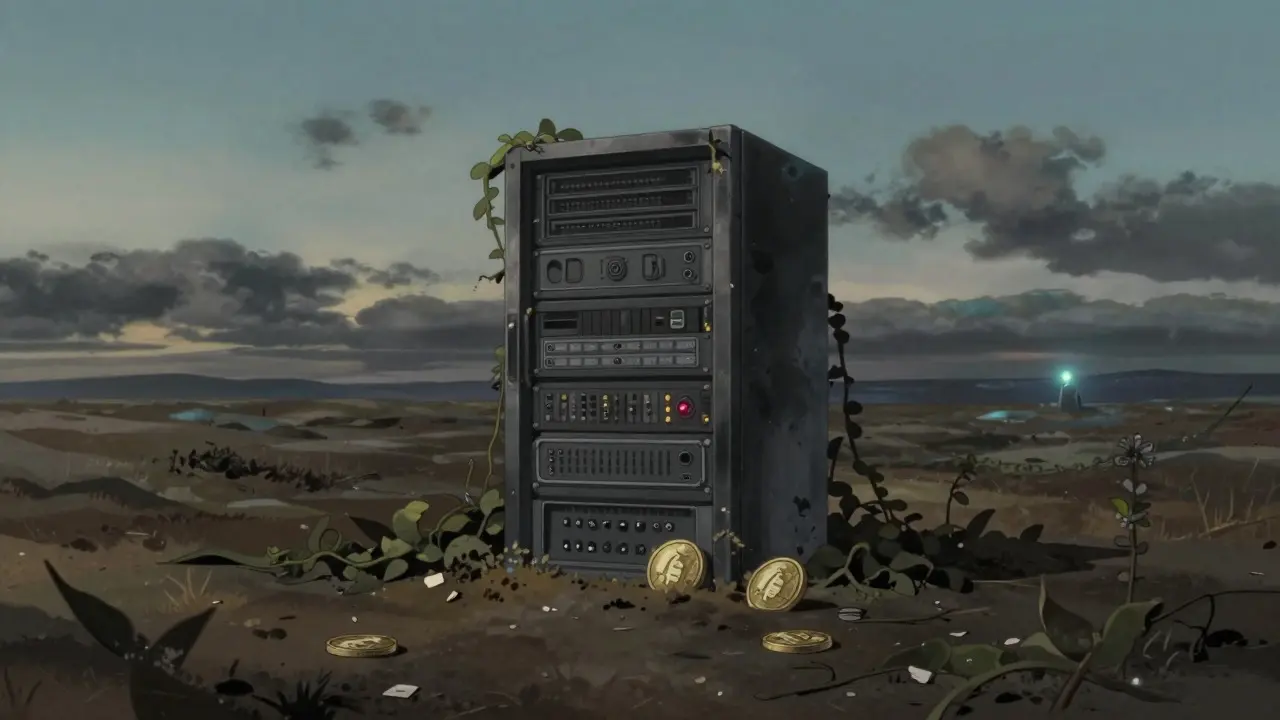
This creates a dangerous environment for investors. You could buy coins at $0.001, and then realize you cannot sell them at all because there are no buyers. This is a classic characteristic of "zombie" coins-projects that are technically alive but functionally dead.
Comparing Adzcoin to Established Alternatives
To understand why Adzcoin struggles, compare it to Basic Attention Token (BAT). BAT was created for the exact same purpose: facilitating payments in a digital advertising ecosystem. However, BAT is integrated into the Brave browser, which has tens of millions of monthly active users.
BAT has a clear path to value: users earn BAT for viewing ads, and advertisers pay BAT to reach those users. It’s a closed loop with real traffic. Adzcoin’s ADZbuzz network, on the other hand, lacks verifiable traffic metrics. There are no independent audits showing how many people see these ads. Without eyeballs, ad space has little value.
| Feature | Adzcoin (ADZ) | Basic Attention Token (BAT) |
|---|---|---|
| Primary Use Case | ADZbuzz Ad Network | Brave Browser Ecosystem |
| User Base | Unverified / Minimal | 37+ Million Monthly Active Users |
| Market Cap | $30K - $0 (Inconsistent) | $200M+ (Stable) |
| Community Engagement | Negligible | High |
| Risk Level | Extreme | Moderate |
When you see a competitor with a proven product and massive adoption, the niche player needs a very strong reason to exist. Adzcoin hasn’t provided that reason.

Red Flags: Is It a Scam?
We don’t use the word "scam" lightly, but Adzcoin exhibits several warning signs identified by regulators like the SEC and FTC. First, look at the promotional material found online. Phrases like "Next Bitcoin" and promises of "exponential growth with minimal risk" are hallmarks of fraudulent schemes. In finance, high returns always come with high risk. Anyone telling you otherwise is lying.
Second, consider the transparency. Where is the whitepaper? Where is the GitHub repository showing code updates? Where are the founder profiles? For Adzcoin, these answers are largely absent. The official website has frequently returned errors or lacked substantive information. Legitimate projects publish their roadmaps, financials, and team details. Obscurity is their friend.
Furthermore, the lack of community discussion is telling. Search Reddit, Twitter, or specialized crypto forums. You’ll find almost nothing. Even failed projects usually have angry communities discussing why they failed. Adzcoin simply fades into silence. This absence of social proof is a major deterrent for serious investors.
Who Should Avoid Adzcoin?
If you are looking for a safe place to park funds, avoid ADZ. If you are seeking a reliable tool for digital advertising, look elsewhere. This coin is best suited for one group: speculative gamblers who understand that they are likely throwing money into a black hole.
Even for gamblers, the mechanics are flawed. With such low liquidity, exiting a position is difficult. You might see your portfolio value go up on paper, but converting those gains into cash could be impossible without slippage eating away your profits.
Instead of chasing obscure tokens with vague promises, consider sticking to assets with transparent data, active development, and real-world usage. The crypto market is crowded, and survival of the fittest is the rule. Right now, Adzcoin appears to be losing that fight.
Final Thoughts on ADZ Utility
The concept of using crypto for advertising is valid. We’ve seen it work with BAT and others. But execution matters more than ideas. Adzcoin has the idea but lacks the execution. No users, no miners, no clear data, and no community support make it a hollow shell of a project.
Before investing time or money, ask yourself: Who benefits if I buy this? Often, in cases like this, the answer is the person selling it to you. Do your due diligence, check multiple sources, and if the data doesn’t add up, walk away.
Is Adzcoin (ADZ) a legitimate cryptocurrency?
While Adzcoin operates on a blockchain, it displays many characteristics of a low-liquidity, high-risk asset rather than a robust financial instrument. It lacks consistent market data, active development, and a visible user base. Proceed with extreme caution.
Where can I buy Adzcoin?
Adzcoin has been listed on smaller exchanges like HTX. However, due to extremely low trading volumes, buying and selling can be difficult and may result in significant price slippage.
What is the ADZbuzz network?
ADZbuzz is the advertising network associated with Adzcoin. It claims to allow advertisers to purchase ad space using ADZ tokens. However, there is little public data verifying its traffic or effectiveness.
Why is Adzcoin so volatile?
The volatility is driven by extremely low liquidity. With daily trading volumes sometimes under $10, small trades can cause large percentage swings in price, making it unstable and risky.
How does Adzcoin compare to Basic Attention Token (BAT)?
BAT is integrated into the popular Brave browser with millions of users and a stable market cap. Adzcoin lacks a comparable user base, has inconsistent data, and operates in obscurity, making BAT a far more established option in the crypto-advertising space.