
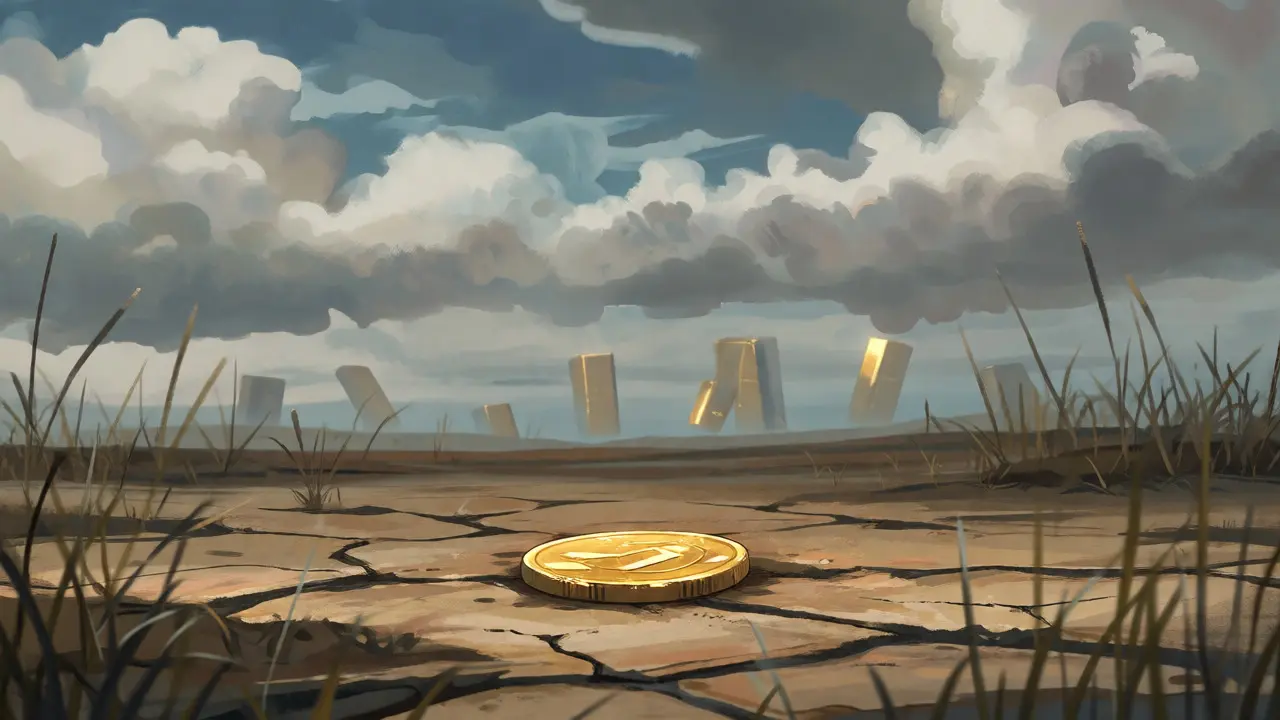
You see a coin trading for less than a fraction of a cent. It promises to tokenize real estate and gold. You think, "This could be the next big thing." Then you check the charts. The price has dropped 99% from its peak. Only 495 people hold it. This is Aetherius Infinite Chain (AIC), a low-market-cap cryptocurrency focused on real-world asset tokenization. But does it actually work, or is it just noise in the crypto market?
Let's cut through the hype. AIC launched with big dreams but tiny numbers. As of late 2025, its market cap hovers around $25,000. That’s not millions. That’s thousands. For context, that’s less than the cost of a decent used car. Yet, the project claims to bridge traditional finance and blockchain. Is this a hidden gem or a trap? Let's look at the facts.
What Exactly Is Aetherius Infinite Chain?
Aetherius Infinite Chain operates as a utility token designed to facilitate the tokenization of real-world assets (RWAs). Think houses, businesses, or precious metals. The idea is simple: put these assets on the blockchain so they can be traded like stocks. AIC aims to be the infrastructure layer for this shift. However, unlike established platforms, AIC lacks public transparency.
The team behind AIC remains anonymous. There are no known developers or companies listed in official documents. Promotional materials describe them as "architects of an ecosystem," but there is no LinkedIn page or GitHub repository to verify their code. The token runs on what appears to be the Binance Smart Chain (BSC), given the contract address format, though this isn't explicitly confirmed in technical docs. Total supply is fixed at 100 billion tokens. Almost all of these tokens are already in circulation.
| Attribute | Value / Detail |
|---|---|
| Token Name | Aetherius Infinite Chain (AIC) |
| Primary Use Case | Real-World Asset (RWA) Tokenization |
| Total Supply | 100,000,000,000 Tokens |
| Market Cap (Late 2025) | ~$24,550 - $48,860 |
| All-Time High Price | $0.00002809 (Dec 2024) |
| Current Price Range | $0.0000002 - $0.0000005 |
| Holder Count | ~495 Wallets |
The Problem With Liquidity and Adoption
Here is where things get tricky. A token is only useful if people can buy and sell it. AIC fails this basic test. Daily trading volume often sits below $1,000. On some days, it’s barely over $250. Imagine trying to sell your house, but only one person shows up to look at it every month. That’s the liquidity situation here.
With only 495 holders, the community is incredibly small. Compare this to Bitcoin, which has millions of holders. Or even smaller altcoins with tens of thousands. AIC’s user base is negligible. Most of these holders are likely speculators who bought early hoping for a moonshot. They aren’t using the token to buy tokenized real estate. Why? Because there is no evidence that any real estate has actually been tokenized on this chain.
Liquidity issues create a vicious cycle. Low volume means high slippage. If you try to sell a large amount, the price crashes. Users report failed transactions when trying to exit positions. One user on Trustpilot noted buying $50 worth of AIC and being unable to sell even 10% of it due to zero liquidity. This isn’t investing; it’s gambling with rigged odds.

Is AIC a Security Risk?
Crypto regulations are tightening globally. In November 2025, the US SEC issued guidance stating that tokens with market caps under $50 million and unclear utility are "presumptively securities." AIC fits this description perfectly. Its market cap is well under $50 million. Its utility is theoretical, not proven.
If regulators classify AIC as a security, exchanges might delist it. Many micro-cap exchanges operate in gray areas. But major platforms like Coinbase or Kraken require strict compliance. AIC is currently listed on niche exchanges like Bitget. These platforms have fewer regulatory hurdles but also lower protection for users. If the SEC cracks down, AIC could vanish from trading screens overnight.
There is also the risk of wash trading. Wash trading happens when traders buy and sell to each other to fake volume. CryptoSlate’s report "The Micro-Cap Mirage" flagged AIC for probable wash trading. The math supports this. A market cap of $25,000 with daily volume of $259 suggests very little organic interest. The volume is likely manufactured to keep the token visible on trackers.
How Does AIC Compare to Established RWA Projects?
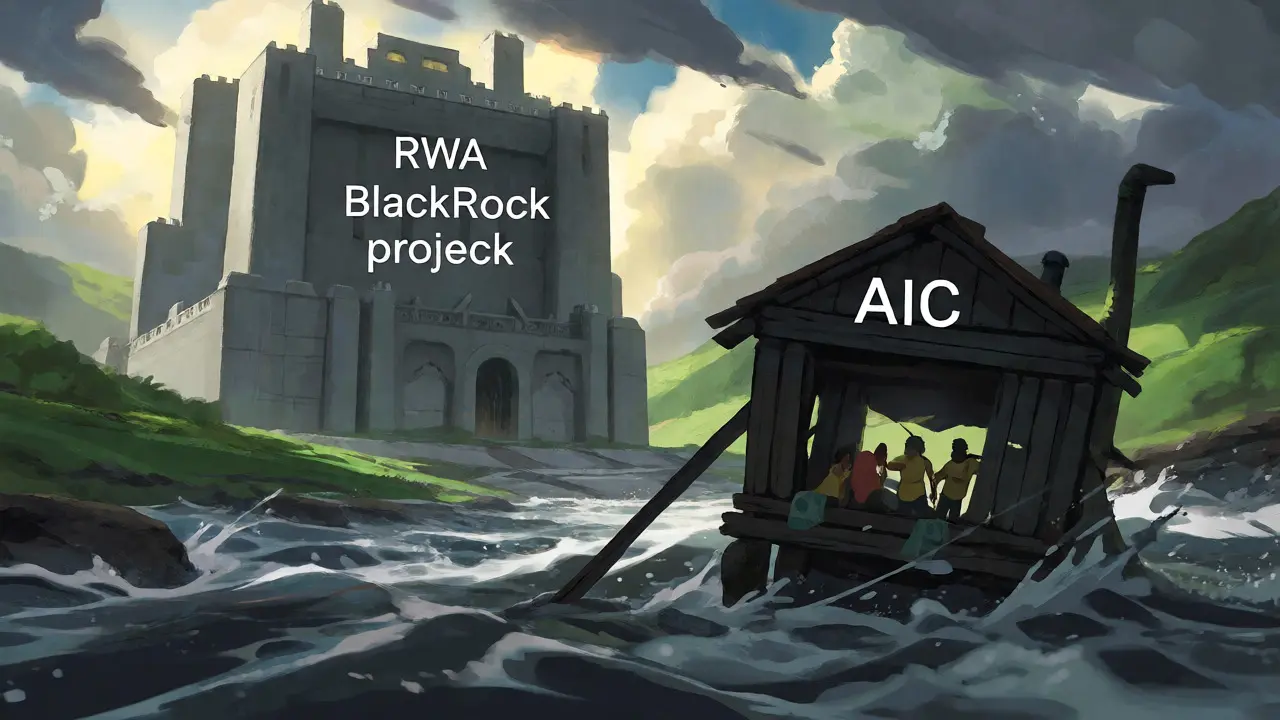
The real-world asset sector is booming. Major players are entering the space. BlackRock launched BUIDL. Securitize has billions in tokenized assets. How does AIC stack up against these giants?
- Polymath (POLY): A veteran in security tokens. Market cap exceeds $50 million. Has actual partnerships and legal frameworks.
- Securitize: Not a token itself, but a platform processing billions in RWAs. Backed by institutional money.
- Aetherius Infinite Chain (AIC): Market cap ~$25k. No known partners. Anonymous team.
The gap is massive. Polymath trades at roughly $0.024 per token. AIC trades at $0.0000003. Sure, AIC is cheaper. But cheap doesn’t mean good. A penny stock can go to zero. A blue-chip stock rarely does. AIC lacks the infrastructure, legal backing, and developer activity to compete. It’s like comparing a lemonade stand to McDonald’s. Both sell drinks, but only one has global logistics.
Can You Actually Buy and Sell AIC?
If you still want to try AIC, here is the reality. You cannot buy it on Binance or Coinbase. You need to use smaller exchanges like Bitget or specific decentralized exchanges on BSC. The process involves connecting a wallet like MetaMask and swapping BNB for AIC.
Be prepared for frustration. Transaction failures are common. Some users report a 78% failure rate due to insufficient liquidity pools. If you buy, hold tight. Selling requires patience. You might need to split your sale into tiny chunks to avoid crashing the price. Always check the order book before selling. If there are no buyers, your token is stuck.
Documentation is another hurdle. The official website referenced in data aggregators often shows placeholder text or broken links. There is no whitepaper detailing how the tokenization works technically. No API for developers. No roadmap updates since late 2024. For a project claiming to build financial infrastructure, this silence is deafening.
Should You Invest in Aetherius Infinite Chain?
Let’s be honest. AIC is a speculative play, not a fundamental investment. Experts rate its viability poorly. Delphi Digital gave it a 3% chance of surviving past Q2 2026. Why? No development activity. No community growth. Regulatory threats loom large.
If you invest, treat it like lottery tickets. Money you can afford to lose completely. Do not expect dividends. Do not expect governance rights. There is no staking mechanism documented. You are betting that someone else will pay more for it later. Given the 99% drop from its all-time high, that bet looks risky.
For those interested in real-world assets, consider established projects. Look for tokens with transparent teams, audited smart contracts, and actual assets on-chain. AIC offers none of these. It is a ghost town with a few residents shouting about the future.
Is Aetherius Infinite Chain (AIC) a scam?
It is not necessarily a scam in the sense of theft, but it exhibits classic signs of a pump-and-dump scheme. Key red flags include an anonymous team, extremely low market cap ($25k), minimal holder count (495), and negligible trading volume. While no rug pull has been officially confirmed, the lack of transparency and utility makes it highly risky.
Where can I buy AIC crypto?
AIC is primarily available on smaller centralized exchanges like Bitget and potentially on decentralized exchanges within the Binance Smart Chain ecosystem. It is not listed on major tier-1 exchanges like Coinbase or Binance.
Does AIC have real-world utility?
The stated purpose is tokenizing real-world assets like real estate and gold. However, there is no verifiable evidence of active projects or assets currently tokenized on the Aetherius Infinite Chain network. Utility remains largely theoretical.
Why did AIC price drop 99%?
The price collapse is attributed to low liquidity, lack of development progress, and general market sentiment toward micro-cap tokens. After an initial spike to $0.00002809 in December 2024, interest faded quickly, leading to a steady decline as early investors exited.
Is AIC regulated by the SEC?
While not explicitly sued yet, recent SEC guidelines suggest tokens with market caps under $50 million and unclear utility may be classified as securities. This puts AIC in a legally vulnerable position, potentially limiting its exchange listings.


Justin Lemanski
October 22, 2026 AT 21:06Look, I've seen this movie before. It's the classic 'too good to be true' trap wrapped in fancy buzzwords like 'RWA' and 'tokenization'. The fact that the team is anonymous is a massive red flag. Who are these 'architects'? Ghosts? If they were legit devs, they'd have GitHub commits. They don't. They have a website with broken links. That's not a project; that's a graveyard waiting for your money. You're paying for a domain name and some hype.
mike blogger
October 24, 2026 AT 18:30Spot on Justin. The liquidity stats alone should scare anyone off. $250 daily volume is nothing. You can't even exit a position without moving the market against yourself. Stick to projects with real volume and transparent teams. Don't let FOMO make you stupid.
Sean J Fortune
October 25, 2026 AT 22:15It is frankly embarrassing that people still fall for these micro-cap mirages when the data is so blatantly screaming 'scam' from the rooftops. One must consider the sheer audacity of an anonymous team claiming to revolutionize global finance while operating out of what is essentially a digital garage with no verifiable codebase. The comparison to BlackRock or Securitize is not just apt; it is devastatingly illustrative of the chasm between institutional-grade infrastructure and this whimsical fantasy. When one observes the holder count dwindling to less than five hundred souls, it becomes clear that this is not a community but a cult of personality centered around zero substance. The regulatory implications are equally dire, as the SEC’s recent guidance effectively puts a target on the back of any token lacking clear utility and transparency. To invest here is to ignore the fundamental laws of economics and probability in favor of a lottery ticket mentality that rarely pays out. We are witnessing the death rattle of a pump-and-dump scheme that never truly lived up to its potential. It is a pity that retail investors continue to bleed capital into these voids rather than seeking out assets with actual legal frameworks and developer activity. The silence from the development team is not merely awkward; it is deafening proof of abandonment. In my professional opinion, this asset class is dead on arrival, regardless of whatever marketing fluff remains on their stagnant website. Do not mistake low price for value; a worthless coin is still worthless at a fraction of a cent. This is not innovation; it is stagnation dressed in blockchain terminology. Proceed with extreme caution, if you proceed at all, because the risk-reward ratio here is heavily skewed toward total loss.
Ryan Hall
October 27, 2026 AT 00:08Ugh. Another anon team rug pull in progress. 😒 Just look at the chart. It’s bleeding out. No dev activity since late 2024 means they’ve already left. Why hold onto hope when the data says otherwise? It’s sad really. 💀
Chukwunanu Sunday
October 28, 2026 AT 10:03Hey guys, calm down a bit. Maybe give them some credit for trying something new? RWA is hot right now. Even if it fails, at least they attempted to bridge TradFi and DeFi. Not every project needs to be perfect immediately. Patience is key in crypto. 🌍
Jamie Robb
October 29, 2026 AT 14:53honestly i dont see why ppl bother w/ this stuff. the doc is empty. literally placeholder text. how u gonna trust a project w/ no whitepaper details? feels like a quick cash grab. skip it.
Erin Williams
October 30, 2026 AT 04:25I appreciate the skepticism, everyone! But remember, early-stage projects often lack polish. If you do decide to test the waters, keep it small-like 1% of your portfolio max. Treat it as an experiment, not an investment. And definitely check the contract address on BscScan first to ensure it hasn't been minted recently. Stay safe out there! 🌟
Grace Glandy
November 1, 2026 AT 04:19Oh wow, the energy in this thread is intense! 🔥 But seriously, looking at those charts, it looks like a ghost town. 495 holders? That’s smaller than my high school graduating class! If you’re holding, maybe it’s time to cut losses and redeploy that capital into something with actual momentum. Don’t let sunk cost fallacy trap you! 💸
Brian Klidies
November 2, 2026 AT 06:03The point about wash trading is valid. CryptoSlate flagged it, and the volume-to-market-cap ratio supports that theory. It creates artificial interest where none exists organically.
Jack Denter
November 3, 2026 AT 20:44🇮🇪 vs 🇺🇸 perspectives on this are interesting. Over here we see many such micro-caps vanish. Transparency is non-negotiable. 🕵️♂️💰
Joy Joseph
November 5, 2026 AT 09:32One must remain vigilant regarding the regulatory landscape. The SEC's stance on tokens under $50 million is quite strict. Ignoring this legal vulnerability is imprudent. Furthermore, the absence of a public roadmap suggests a lack of long-term strategic planning. Investors should prioritize compliance and clarity over speculative potential. The current metrics indicate a high probability of failure.
Edington Vernita
November 6, 2026 AT 18:40I think we can all agree that transparency is missing here. It’s okay to be cautious. Respecting boundaries means not pushing others to buy risky assets. Let’s share facts, not fear.
Anshu Raj
November 8, 2026 AT 14:32they knew. they always know. the drop was planned. insiders selling while retail holds. classic pattern. no dev activity means they got paid and left. watch the wallets. they’ll dump the rest soon. 📉👁️
Drew Lemmy
November 8, 2026 AT 15:53Greetings from the US. I find this analysis helpful. It is important to support each other in navigating these complex markets. Thank you for sharing the data.
Ankush Goyal
November 10, 2026 AT 12:45This is morally wrong. Anonymous teams hide behind anonymity to avoid accountability. They take our hard-earned money and provide nothing in return. It is theft by deception. We must boycott such projects. No more blind faith!