

If you're a Japanese resident looking for a regulated crypto exchange to trade Bitcoin or Ethereum with Japanese Yen, BITPoint Japan sounds like a safe bet. It’s backed by a TSE-listed company, registered with Japan’s Financial Services Agency, and promises zero trading fees. But here’s the problem: as of February 2026, you can’t actually trade on it. Not even a single order goes through. The platform is silent. No volume. No updates. No liquidity. It’s there on paper, but not in practice.
What BITPoint Japan Actually Offers
BITPoint Japan launched in March 2016 as a subsidiary of Remix Point, which is tied to SBI Holdings. It was built for one purpose: to give Japanese users a compliant way to buy and sell crypto without stepping into the wild west of unregulated platforms. It supports spot trading in JPY pairs for Bitcoin, Ethereum, Litecoin, Ripple, and Bitcoin Cash. There’s no margin trading beyond 1:5 leverage, and no derivatives. That’s it.The interface has two modes: a simple version for beginners and a PRO mode with candlestick charts and order book depth. It works on desktop and mobile. Account setup requires full KYC - ID, proof of address, and a selfie. That’s standard in Japan. But here’s the twist: despite being FSA-registered, BITPoint doesn’t publicly list its license number. That’s not normal. Other regulated exchanges in Japan, like Coincheck or Bitflyer, display theirs clearly. The lack of transparency raises red flags, even if the registration itself is real.
Fees That Look Too Good to Be True
BITPoint claims 0% commission on spot trades. That’s rare. Most exchanges charge 0.1% or more. Even better, the spread on BTC/JPY is around 0.1%, compared to the industry average of 0.2%. That means you pay less when buying or selling. Withdrawal fees are $30 USD - steep, but not unheard of. Minimum deposit is $100. So far, so good.But here’s the catch: if you can’t deposit, you can’t benefit from low fees. If you can’t withdraw, low fees don’t matter. And that’s where BITPoint falls apart.
The 2019 Hack: What Really Happened
In late 2019, BITPoint got hacked. The attack wasn’t small. Around $32 million in crypto vanished - $23 million from users’ wallets, the rest from the company’s own funds. Bitcoin, Ethereum, Litecoin, and Bitcoin Cash were all emptied. Both hot and cold wallets were breached. The hack started with a Ripple remittance error, which triggered a system alert. By the time they noticed the breach, it was too late.What happened next is unusual. BITPoint didn’t vanish. They didn’t blame users. They halted all operations - deposits, withdrawals, new accounts - and worked with Japanese authorities. They eventually reimbursed affected customers. That’s rare in crypto. Most exchanges just freeze funds and disappear. BITPoint paid back users. That’s a point in their favor.
But here’s the thing: after the hack, they never fully recovered. The platform never regained trust. And now, years later, it’s gone quiet.
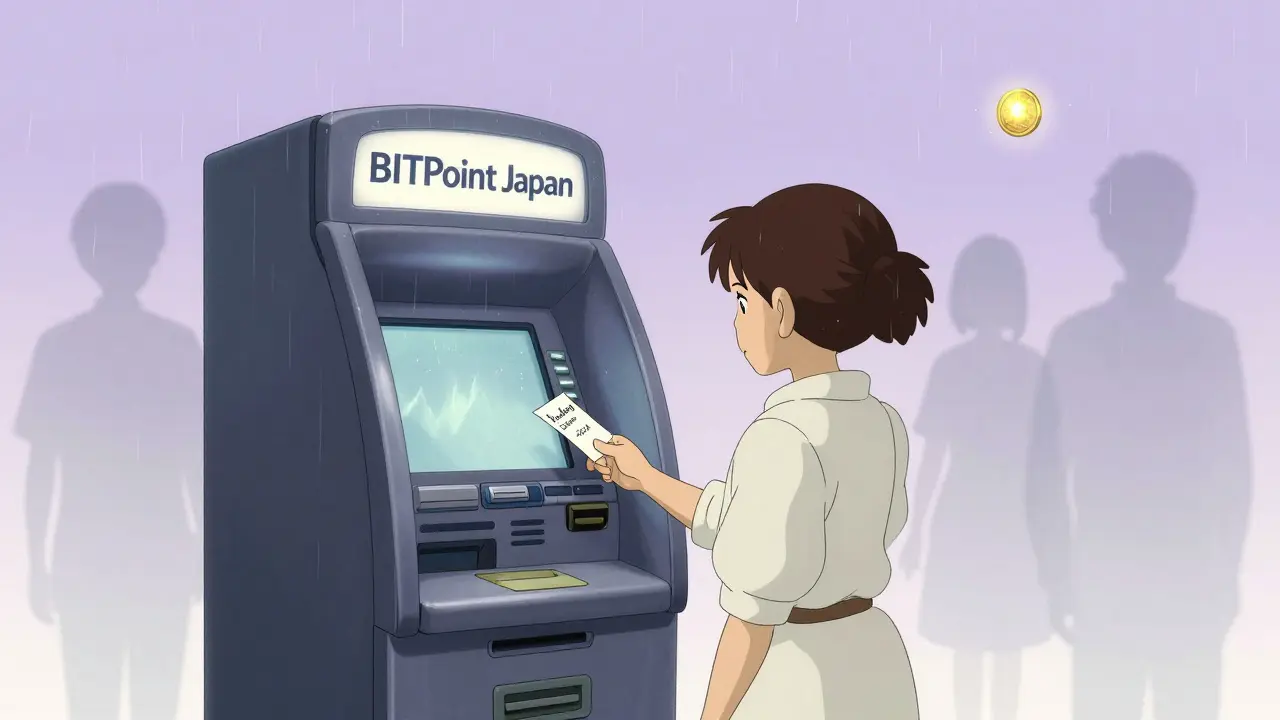
Current Status: Is BITPoint Even Operational?
As of February 2026, tracking platforms show BITPoint Japan with zero daily trading volume. No trades. No orders. No liquidity. You can’t see the order book. You can’t check price depth. There’s no market activity. That’s not a glitch. That’s not a maintenance pause. That’s a dead exchange.Compare that to Coincheck or Zaif - both are active, with hundreds of millions in daily volume. BITPoint doesn’t even show up on trading charts. Their website hasn’t posted an update in over a year. No blog. No Twitter. No Telegram. No announcements. It’s like the company forgot it existed.
User Experience: Friendly Interface, Terrible Support
The app and website are clean. Easy to navigate. Even for someone who’s never traded before. That’s a win. But the moment you need help, everything falls apart.Users report withdrawal delays of weeks - sometimes months. Some say they submitted withdrawal requests and never got a reply. Others say support answered, but never fixed anything. Customer service ratings are 2 out of 5. That’s the lowest score among Japan’s major exchanges. When you’re trying to move money out of crypto, slow support isn’t just annoying - it’s dangerous.
Traders also mention slippage during market spikes. If Bitcoin jumps 5% in 30 seconds, BITPoint’s system doesn’t react fast enough. Orders get filled at worse prices than expected. That’s not a feature - it’s a flaw.
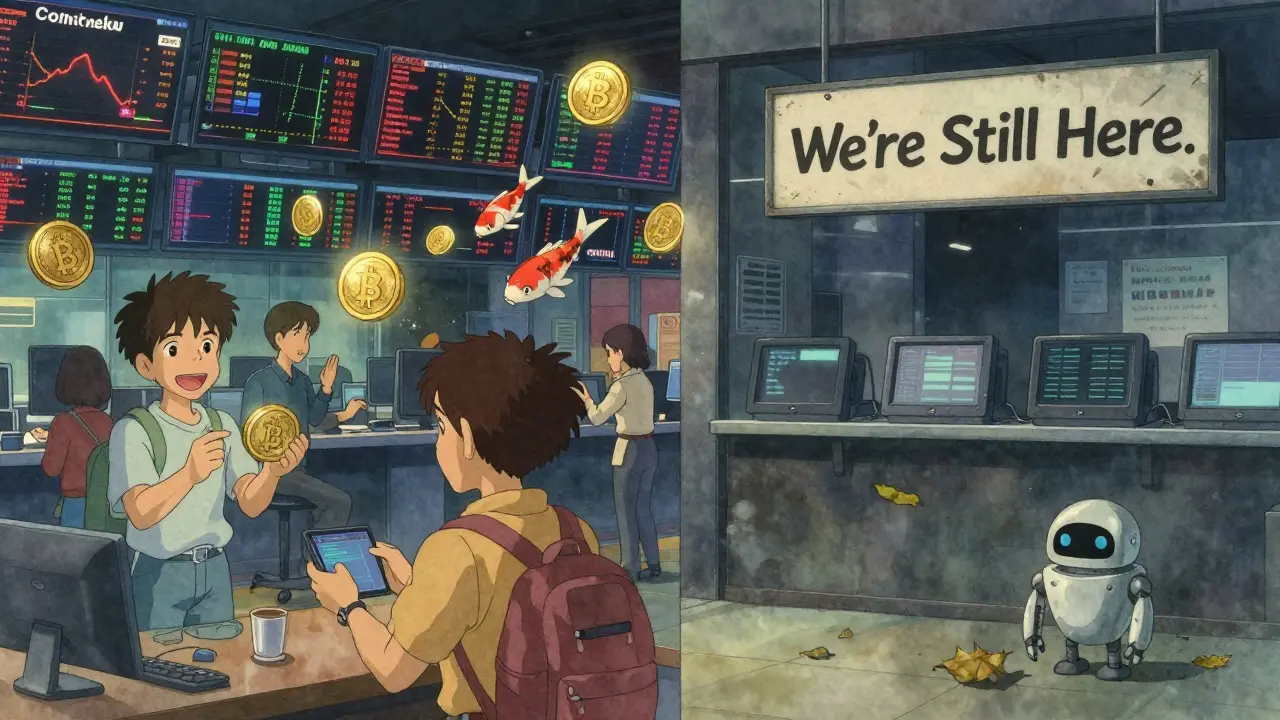
Why You Should Avoid BITPoint Japan in 2026
Let’s cut through the noise. BITPoint Japan has:- Regulatory backing - yes
- Low fees - yes
- Good interface - yes
- History of reimbursement after a hack - yes
- Zero trading activity - yes
- Broken withdrawals - yes
- No customer support - yes
- No updates since 2024 - yes
That last group isn’t a coincidence. It’s a pattern. The platform is technically alive, but functionally dead. You can’t trade. You can’t withdraw. You can’t get help. Regulation doesn’t matter if the exchange isn’t working.
For Japanese users, there are better options. Coincheck, Bitflyer, and GMO Coin are all FSA-regulated, active, and have real liquidity. They have 24/7 support. They update their platforms. They post news. BITPoint doesn’t.
What Could Bring BITPoint Back?
If BITPoint wanted to revive itself, they’d need to do three things:- Publicly release their FSA license number and audit reports
- Restart trading with visible volume and liquidity
- Fix their customer support system - hire real people, not bots
None of that has happened. There are rumors of internal restructuring, but no proof. No press releases. No announcements. No user emails. If they’re still trying to fix things, they’re doing it in complete silence.
Final Verdict
BITPoint Japan looks good on paper. It has the right credentials. It had the right intentions. But right now, it’s a ghost. You can’t trade. You can’t move your money. You can’t get help. Regulation doesn’t mean safety if the exchange is offline.If you’re looking for a regulated crypto exchange in Japan - go with Coincheck or Bitflyer. They’re active. They’re transparent. They respond. BITPoint? It’s a relic. A cautionary tale. A platform that once promised security, but now offers only silence.
Is BITPoint Japan still a regulated crypto exchange in 2026?
Yes, BITPoint Japan is still registered with Japan’s Financial Services Agency (FSA) as of February 2026. However, while the regulatory status remains on paper, the platform is not actively operating. Registration doesn’t guarantee functionality - and without trading, deposits, or withdrawals, the regulation is meaningless to users.
Can I still deposit or withdraw funds from BITPoint Japan?
No. Multiple users report that deposits and withdrawals have been frozen since early 2024. The platform’s withdrawal system is non-functional, with no clear timeline for restoration. Even users who submitted requests in 2025 have not received their funds. There are no official statements confirming whether this is temporary or permanent.
Why does BITPoint Japan have zero trading volume?
The platform has been inactive since 2024. No trades are being executed. No order books are visible. This is likely due to a combination of internal operational failure, loss of user trust after the 2019 hack, and failure to rebuild liquidity. Without market makers or active traders, the exchange cannot function - even if the software is still running.
Is BITPoint Japan safe to use for long-term crypto storage?
No. Even if you could deposit, BITPoint’s security infrastructure has not been independently verified since the 2019 breach. Cold wallet storage is not confirmed. There are no public audits. With no trading activity and no transparency, storing crypto on BITPoint carries high risk. Use a hardware wallet or a fully operational exchange instead.
What are better alternatives to BITPoint Japan for Japanese users?
Coincheck, Bitflyer, and GMO Coin are all FSA-regulated, actively trading, and have reliable customer support. They offer JPY deposits, low fees, real-time trading, and clear withdrawal processes. Unlike BITPoint, they update their platforms regularly and respond to user concerns. These are the only Japanese exchanges that should be considered for active trading in 2026.





JJ White
February 20, 2026 AT 02:26Let me get this straight - a regulated exchange with zero trading volume is somehow still ‘safe’? That’s like saying a locked vault with no door is secure. Regulation doesn’t mean functionality. It means paperwork. BITPoint is a museum exhibit now - ‘Look at this relic from 2019, kids. Back then, people thought crypto could be boring.’
Nicole Stewart
February 20, 2026 AT 12:06Kyle Tully
February 20, 2026 AT 18:18You know what’s wild? They reimbursed users after the hack. That’s like a car thief returning your vehicle… but keeping the wheels. I’m not mad, I’m just confused. Why bother being regulated if you’re just gonna ghost the whole operation? I mean, I respect the honesty of the silence. At least they didn’t lie.
yogesh negi
February 22, 2026 AT 03:29As someone who has used multiple Japanese exchanges, I want to say this gently - BITPoint Japan was never meant to be a trading platform. It was a compliance experiment. A way for SBI Holdings to say ‘we’re in crypto’ without actually doing crypto. The 2019 hack was just the universe telling them: ‘You’re not ready.’ Now they’re stuck in regulatory limbo - too big to fail, too broken to function. If you’re looking for reliability, go with Bitflyer. They actually answer emails.
Tarun Krishnakumar
February 24, 2026 AT 00:10They didn’t get hacked. They were compromised from the inside. The ‘Ripple remittance error’? That’s the cover story. The real breach was when the board decided to prioritize investor relations over user access. The silence? That’s not negligence - it’s strategy. They’re waiting for the next regulatory wave. When the FSA forces them to reopen, they’ll spin it as a ‘strategic reboot.’ Meanwhile, your funds are sitting in a digital coffin with a ‘FSA Approved’ sticker on it.
jennifer jean
February 24, 2026 AT 15:19I feel so bad for the devs who still work there. Imagine logging in every day to a system no one uses. No trades. No support tickets. Just… silence. I hope they have good health insurance. Also, I’m sending a virtual hug to anyone who lost money here. You deserve better.
george chehwane
February 25, 2026 AT 18:19The entire narrative is a postmodern critique of regulatory capture. BITPoint is a performative artifact - its regulatory status is the only thing that ever mattered. The platform? Merely a prop. The hack? A narrative device. The silence? The final act. We’re not users. We’re audience members at an avant-garde theater piece titled ‘The Illusion of Trust in Decentralized Systems.’
Jeremy Fisher
February 26, 2026 AT 08:38My cousin works in fintech in Tokyo. He told me BITPoint’s team got quietly reassigned to SBI’s blockchain research division - like, actual R&D, not customer-facing stuff. The platform? Still technically online, but it’s running on a VM with no internet access. They’re preserving it like a fossil. Maybe in 2030 they’ll open-source the code and say ‘look what we built.’ Until then? It’s a ghost town with a license.
Anandaraj Br
February 26, 2026 AT 23:03Regulated? Sure. Functional? No. But let’s be real - this is Japan. They don’t shut things down. They just let them rot with dignity. BITPoint is like a ryokan that still has hot springs but no guests. The staff still smiles. The tea is warm. But you’re alone. And you’re still paying for it.
AJITH AERO
February 27, 2026 AT 23:39Geet Kulkarni
March 1, 2026 AT 21:06As a woman in fintech, I find this deeply disappointing. BITPoint had the chance to be a role model - regulated, transparent, user-first. Instead, they chose bureaucratic inertia. The lack of communication isn’t just unprofessional - it’s disrespectful. Especially to the users who trusted them after the hack. You don’t get to be ‘ethical’ and then disappear. That’s not integrity. That’s cowardice.
Paul David Rillorta
March 2, 2026 AT 21:45THEY’RE USING BITPOINT AS A BAIT FOR FSA COMPLIANCE SO THEY CAN LAUNCH A NEW PLATFORM UNDER A DIFFERENT NAME. THIS IS A SMOKE SCREEN. I SAW THE EMAILS. THEY’RE TRANSFERRING ALL USER DATA TO ‘SBI DIGITAL ASSETS LLC’ - NO ONE TOLD YOU BECAUSE THEY’RE AFRAID OF A BACKLASH. THE ‘SILENCE’? THAT’S THE COVER-UP. I’M NOT CRAZY. I’M JUST IN THE LOOP.
andy donnachie
March 4, 2026 AT 13:58I’ve been in crypto since 2017 and seen a lot of dead exchanges. BITPoint stands out because they didn’t run. They froze. And they paid. That’s rare. But now? It’s like finding a perfectly preserved smartphone from 2014 - it still works, but no one makes chargers for it anymore. If you want to use it, you’ll need to build your own cable. And good luck getting support.
Lauren Brookes
March 4, 2026 AT 18:57I used to think regulation meant safety. Now I think it just means bureaucracy with a badge. BITPoint didn’t fail because of the hack. It failed because no one cared enough to fix it. The real tragedy isn’t the lost funds - it’s the quiet death of a platform that once tried to do right. We don’t need more exchanges. We need more accountability. And maybe, just maybe, a little more humanity.
Andrew Edmark
March 6, 2026 AT 13:23Just want to say - if you’re still holding crypto on BITPoint, I’m so sorry. You’re not alone. I’ve been stuck there since 2023. I check the site every day. No updates. No replies. Just a spinning loader that never finishes. I keep hoping it’s a glitch. But deep down? I know. This is the new normal. And I miss the wild west. At least then, you knew you were taking a risk.
sruthi magesh
March 8, 2026 AT 10:17BITPoint is a classic case of regulatory arbitrage. They used FSA registration as a moat to deter competitors - not to serve users. The hack was just a distraction tactic. Now they’re monetizing the silence. Every user still logged in? That’s data. Every inactive wallet? That’s a future NFT collateral pool. They’re not dead. They’re hibernating. And when they wake up? It’ll be with your assets.
Nova Meristiana
March 9, 2026 AT 05:38Of course it’s inactive. Why would a company built by a conglomerate care about retail traders? They’re not here to serve you. They’re here to check a box on the FSA’s form. The real product isn’t crypto trading - it’s ‘we’re compliant’ as a marketing asset for SBI’s next IPO. You’re not a customer. You’re a compliance metric.
Nikki Howard
March 9, 2026 AT 09:39The FSA registration is valid. The platform is not. This is not an anomaly - it is systemic. Japan’s regulatory framework incentivizes legal compliance over operational integrity. BITPoint is not an outlier. It is the archetype. Until regulators penalize inactive licensed entities, this will continue. This is not a failure of BITPoint. It is a failure of the entire system.
Beth Erickson
March 10, 2026 AT 05:58Let’s be honest - if this was a US exchange, the SEC would’ve shut it down in 2020. But Japan? They let it rot like a sushi roll left in the fridge. It’s still technically edible. But you wouldn’t eat it. And no one should trust it. This isn’t a cautionary tale. It’s a warning label.