
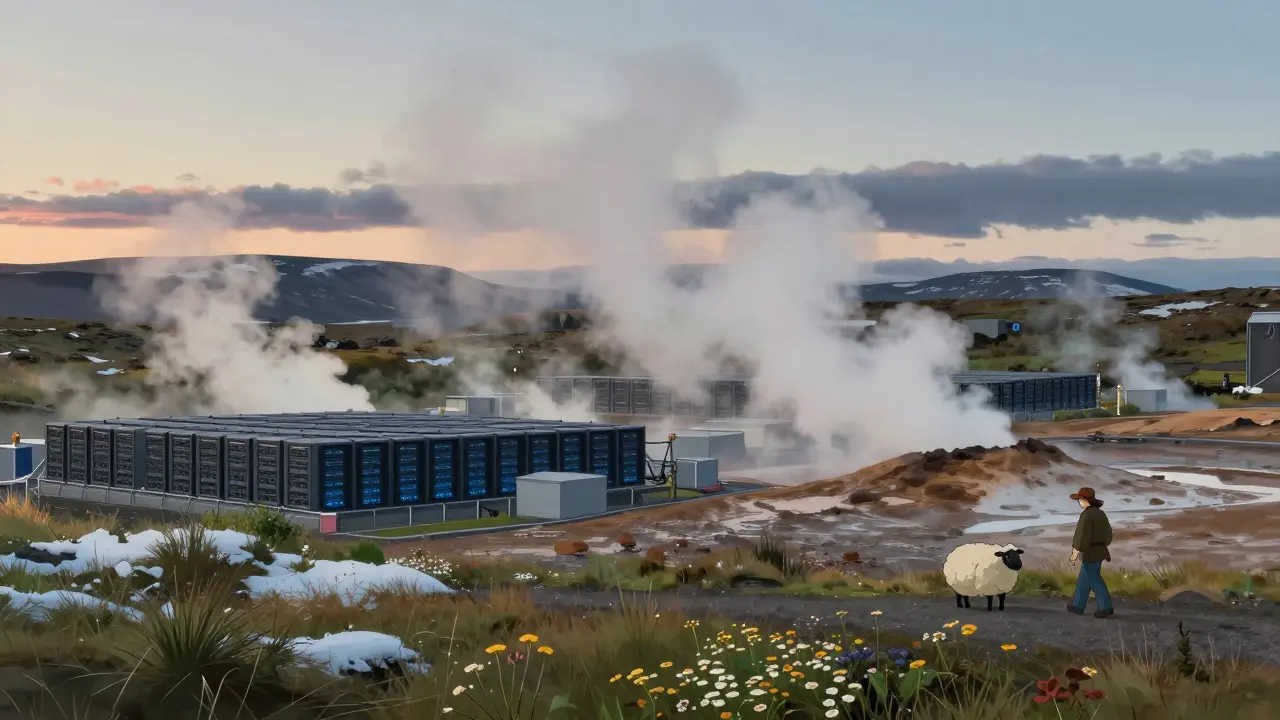
When Iceland became one of the world’s top destinations for crypto mining, it seemed like the perfect match: cold air for cooling, endless geothermal power, and a government that welcomed the industry. But by 2025, that relationship has turned sour. The same clean energy that once made Iceland irresistible to miners is now in short supply-and the government is drawing a line in the sand.
Why Iceland Was a Mining Paradise
In the early 2010s, crypto miners started showing up in Iceland in droves. They weren’t drawn by beaches or volcanoes. They came for electricity. Iceland’s grid runs almost entirely on renewable energy-75% from hydroelectric dams and 25% from geothermal vents. No coal. No gas. No nuclear. Just clean, cheap, and reliable power. Add in the country’s naturally cool climate, which cuts cooling costs for server farms, and you had the ideal setup. By 2023, cryptocurrency mining was using 8% of Iceland’s total electricity. That might sound small, but consider this: Iceland’s population is just over 370,000. That means per person, the country was using more electricity for mining than almost any other nation on Earth. Bitcoin mining alone was responsible for over 1% of the global hashrate. For a country so small, that’s massive. Major players like Genesis Mining, Advania, and Verne Global set up large-scale operations. They signed long-term power contracts when electricity was abundant and cheap. For years, it worked. Miners made profits. Iceland earned foreign currency. Everyone was happy.The Breaking Point
But here’s the problem: Iceland can’t make more electricity-at least not fast enough. The country’s hydroelectric dams are already running near full capacity. The geothermal plants? They’re tapping into the same underground heat sources that power homes and greenhouses. There’s no new dam being built. No new geothermal well being drilled. The infrastructure that once looked limitless is now maxed out. In 2024, Iceland’s grid hit its practical limit at around 120 megawatts of dedicated power for crypto mining. That’s not enough to keep up with the global race for more computing power. New ASIC miners like the Antminer S19 XP and Whatsminer M50S eat up power like a furnace. Each one needs a steady, high-voltage supply. And Iceland? It can’t give it. New miners trying to set up shop now face waiting lists longer than a New Zealand winter. Some have been stuck for over two years just to get approval for a grid connection. Existing operators can’t expand. They’re locked in place.The Government’s Pivot
In March 2024, Prime Minister Katrín Jakobsdóttir made it clear: Iceland won’t let crypto mining grow anymore. It wasn’t about pollution. Miners in Iceland use 100% renewable energy-zero emissions. The issue was opportunity cost. Every kilowatt-hour going to a Bitcoin miner is one less kilowatt-hour for something else. Aluminum smelting, for example, employs thousands of people and brings in steady revenue. Data centers for AI and cloud computing? They’re growing fast. Hydrogen production for export? That’s Iceland’s next big bet. All of these need electricity. And they all pay off in jobs, innovation, or long-term economic stability. Crypto mining? It’s volatile. It creates few local jobs. It doesn’t build infrastructure. It just uses power-and sometimes leaves when prices drop. So the government shifted gears. No new mining permits. No new power allocations. Existing miners? They can stay. But if they want to add more rigs, they’re out of luck.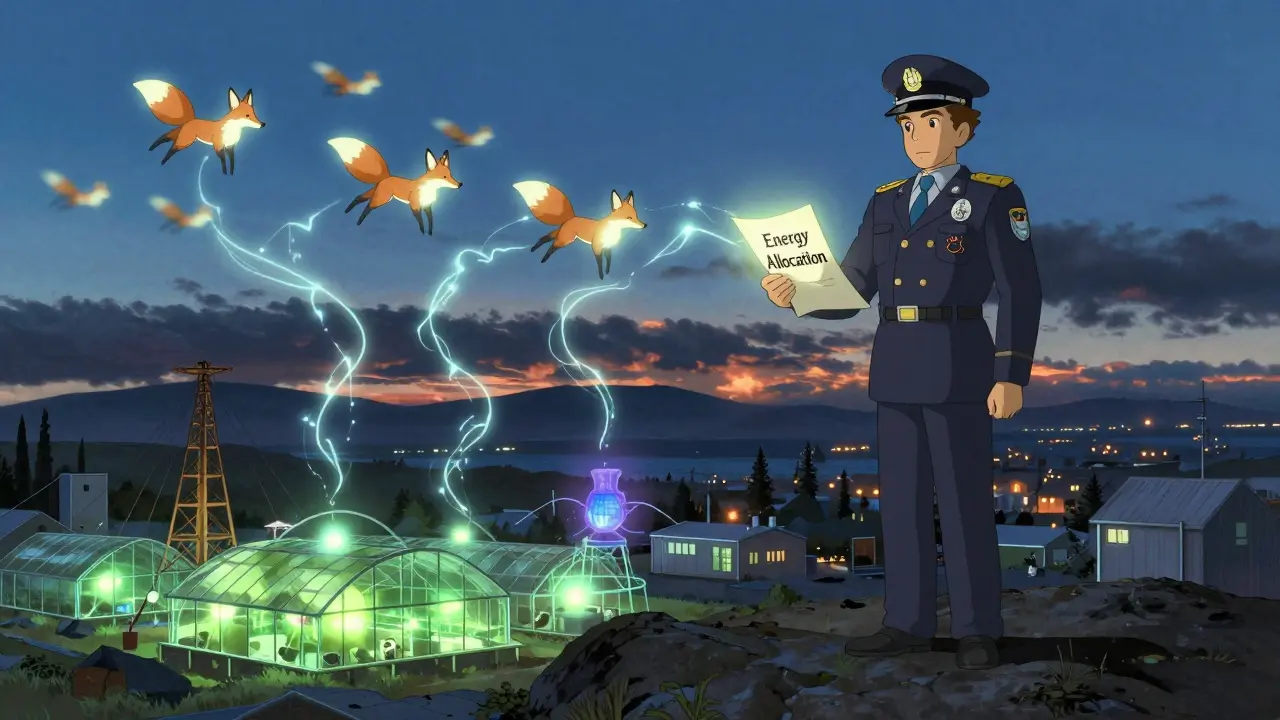
Who’s Getting Left Behind?
The miners who arrived early-between 2013 and 2017-are still doing fine. They locked in cheap rates. Their operations are efficient. They’re profitable. But anyone trying to enter the market now? They’re stuck. Reddit threads from Reykjavik mining communities in 2025 are full of frustration. One miner wrote: “I flew here with $2 million in ASICs. They told me the grid is full. No exceptions. Not even for a single rack.” Compare that to Texas, where miners can still connect to the grid and buy power on the spot market. Or Kazakhstan, where new power plants are being built just for mining. Iceland? It’s become a museum of crypto mining history-preserved, but not growing.The Bigger Picture: Energy as a National Resource
Iceland’s decision isn’t just about Bitcoin. It’s about how a small country decides to use its most valuable asset: clean energy. For decades, Iceland sold its excess power to heavy industries-aluminum, silicon, even data centers. Crypto mining was just another customer. But now, the government is asking: what’s the best use of this power? A 2025 study by the University of Iceland found that for every megawatt used by a mining farm, the country lost out on:- 12 full-time jobs in aluminum production
- 400 kW of power for a new AI research lab
- Enough energy to heat 150 homes in winter






Lauren Brookes
February 18, 2026 AT 14:34Jenn Estes
February 19, 2026 AT 09:19Chris Thomas
February 20, 2026 AT 19:20Dominica Anderson
February 22, 2026 AT 13:03Nova Meristiana
February 22, 2026 AT 16:27Jennifer Riddalls
February 23, 2026 AT 11:33Kyle Tully
February 25, 2026 AT 02:52kieron reid
February 26, 2026 AT 08:27george chehwane
February 28, 2026 AT 05:21Scott McCrossan
March 1, 2026 AT 18:58Rajib Hossaim
March 2, 2026 AT 21:36Ruby Ababio-Fernandez
March 3, 2026 AT 17:03Jeremy Fisher
March 4, 2026 AT 02:29AJITH AERO
March 4, 2026 AT 19:33Sarah Shergold
March 5, 2026 AT 02:17