
DePIN Earnings Calculator
Estimate Your DePIN Earnings
Calculate potential earnings based on your contributed resources and location
Estimated Monthly Earnings
$ 0.00 0.00 DEPIN
Based on in a area
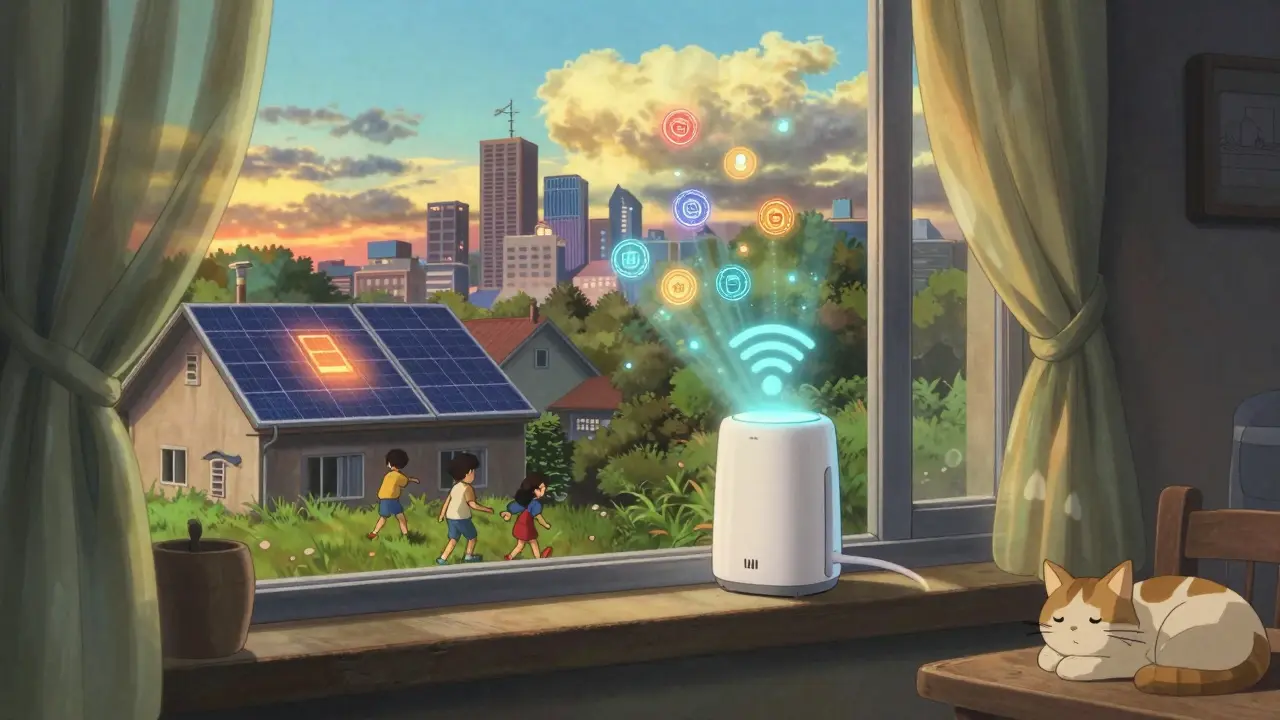
Imagine a world where your old Wi-Fi router doesn’t just sit unused in the corner-it earns you cryptocurrency every time someone nearby uses it to get online. Or where your solar panels don’t just power your home, but also feed extra energy into a neighborhood grid that pays you in tokens. This isn’t science fiction. It’s DePIN-Decentralized Physical Infrastructure Networks-and it’s changing how the physical world connects to blockchain.
What Exactly Is DePIN?
DePIN stands for Decentralized Physical Infrastructure Networks. At its core, it’s a system where people contribute real-world hardware-like cell towers, storage drives, or solar panels-to build public infrastructure, and they get paid in cryptocurrency for doing it. No big corporations. No central authority. Just ordinary people working together, using blockchain to track contributions and reward them fairly. Unlike traditional infrastructure-think Verizon building cell towers or Amazon running AWS servers-DePIN lets anyone participate. You don’t need permission. You don’t need a corporate job. You just need a device and the willingness to share it. In return, you earn tokens that can be traded, held, or used to access services on the network. The magic happens because blockchain turns physical assets into digital tokens. That router you’re not using? It becomes a node on a decentralized network. The energy your solar panels produce? It’s recorded on-chain and sold to neighbors. Every action is tracked, verified, and rewarded automatically through smart contracts.How DePIN Works: The Three Pillars
DePIN doesn’t rely on guesswork or trust. It runs on three clear technical layers that work together like gears in a machine. Smart contracts are the rules engine. They’re self-executing programs on the blockchain that handle everything: who gets paid, how much, and when. If you install a hotspot and it provides 100 hours of network coverage, the smart contract checks the data, confirms it’s valid, and sends your reward-no middleman needed. Tokenization turns real-world resources into digital assets. A gigabyte of storage isn’t just a number-it becomes a token you can trade. A megawatt of solar energy isn’t just power-it’s a claim on the network’s energy pool. These tokens give participants ownership and liquidity. You’re not just renting out your hardware; you’re building equity in a shared system. Distributed architecture means there’s no single server, no central office, no one point of failure. If one hotspot goes offline, the network keeps running. If one storage node dies, the data is still available elsewhere. This makes DePIN networks more resilient than any corporate cloud provider. Put together, these three pieces create a system that’s transparent, automated, and impossible to shut down by a single entity.Two Types of DePIN: Physical vs. Digital
Not all DePIN projects are the same. They fall into two clear categories based on what’s being shared. Physical Resource Networks (PRNs) are tied to location. Think cell towers, EV charging stations, weather sensors, or even underground fiber cables. These resources can’t be moved easily. A hotspot in Wellington can’t serve someone in Tokyo-it’s physically anchored. PRNs are perfect for building local infrastructure where traditional companies won’t go. In rural areas or developing countries, DePIN can fill gaps in connectivity or power that governments and telcos ignore. Digital Resource Networks (DRNs) are location-independent. These include shared computing power, storage space, or bandwidth. Think of it like Airbnb for your laptop’s unused CPU. You install a client, and when others need to run AI models or process data, your machine helps-and you get paid. Projects like Filecoin and Arweave operate this way. Your storage isn’t tied to a city; it’s part of a global, decentralized cloud. The difference matters because PRNs solve real-world access problems, while DRNs solve digital scaling problems. Together, they cover everything from internet access to AI compute.
How Do You Earn in a DePIN Network?
There are three main ways to earn tokens in a DePIN project:- Sharing excess resources-If you have extra bandwidth, storage, or energy, you can plug it into the network. A homeowner with solar panels might sell surplus power to neighbors through a DePIN energy grid. Someone with a high-speed home internet connection can share unused bandwidth.
- Building new infrastructure-Some networks pay you to install hardware. Helium, for example, rewards people who buy and set up wireless hotspots. The more coverage you provide, the more you earn. It’s like being a telecom company… but you only pay for the device, not the whole business.
- Providing services-Some networks ask you to perform tasks. Maybe you run a node that answers location queries, or you contribute computing power to train a model. These are often automated through smart contracts, so you don’t need to be a coder to participate.
Why DePIN Beats Traditional Infrastructure
Traditional infrastructure is slow, expensive, and centralized. Telecom companies spend billions building cell towers, then charge high prices because they’re the only option. Cloud providers like AWS dominate because no one else can match their scale. But they also control the rules, the prices, and the access. DePIN flips that model.- No single point of failure-If Amazon’s servers go down, half the internet stalls. If one DePIN node fails, the network keeps going.
- Lower costs-No corporate overhead. No shareholder demands. No expensive data centers. Participants are incentivized to keep costs low because they’re the ones running the nodes.
- Global reach-In places where ISPs won’t invest, DePIN thrives. A farmer in Kenya can earn crypto by hosting a hotspot. A student in Brazil can rent out their GPU to AI researchers.
- Transparency-Every transaction, every contribution, every payment is recorded on a public ledger. No hidden fees. No black boxes.
Real-World Examples You Can See Today
You don’t have to imagine DePIN. You can use it right now.- Helium is the poster child. It started as a decentralized wireless network. People bought hotspots, placed them in their homes, and earned HNT tokens for providing coverage. Today, Helium’s network spans over 1 million hotspots worldwide, offering low-power internet for IoT devices without needing a cellular plan.
- Filecoin lets you rent out unused hard drive space. It’s like Dropbox, but you’re not paying a company-you’re lending storage to others and earning FIL tokens.
- Power Ledger is a DePIN energy network in Australia. Homeowners with solar panels sell excess power directly to neighbors through a blockchain-based marketplace. No utility company in between.
- Render Network turns idle GPUs into a decentralized rendering farm. Artists and designers pay to render 3D animations using computing power from volunteers around the world.
Decentralized Governance: Who Runs the Network?
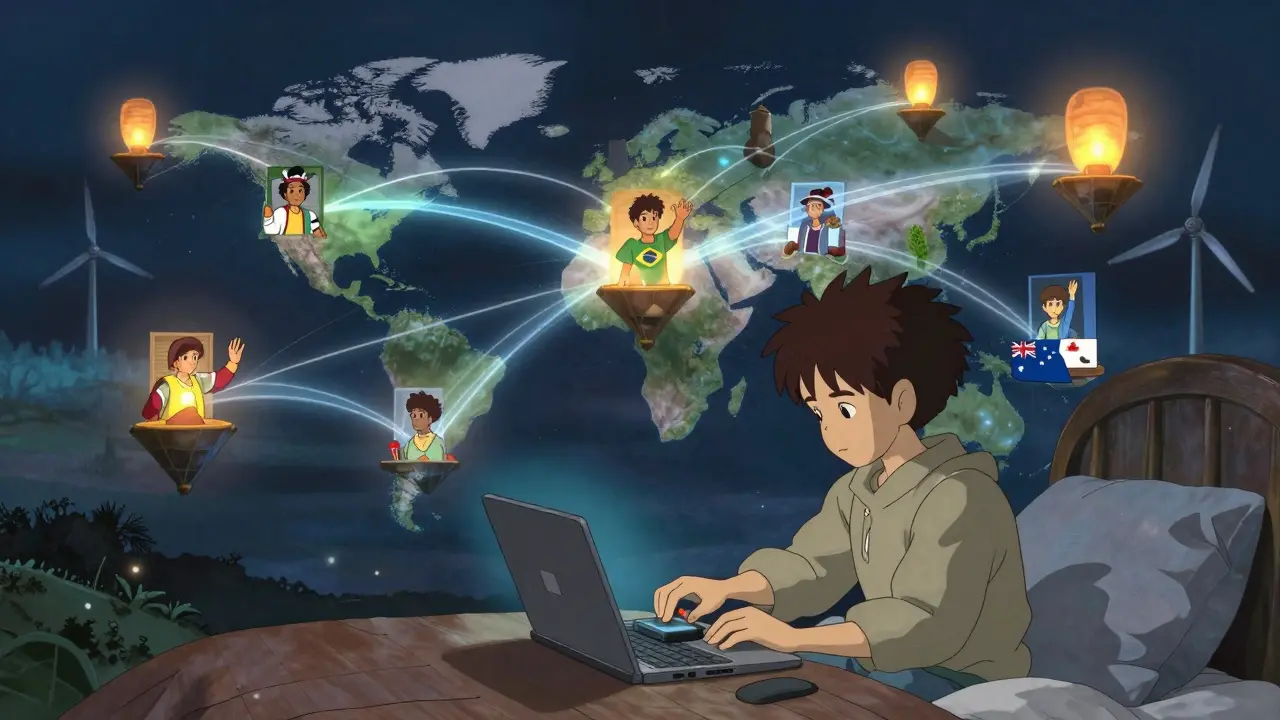
Who decides what happens next? In a traditional company, it’s the CEO and board. In DePIN, it’s the community. Most DePIN projects use token-based governance. If you hold the network’s native token, you can vote on proposals. Should the reward rate change? Should a new type of hardware be supported? Should funds go toward developer grants? These decisions are made through on-chain voting. This means the people who build and use the network also control it. No venture capital firm owns the rules. No corporation can suddenly shut down the service. The network evolves based on what the community needs-not what investors demand. It’s democracy, coded into blockchain.Challenges and Risks
DePIN isn’t perfect. There are real hurdles.- Hardware costs-You need to buy a hotspot, a miner, or a storage device upfront. That’s a barrier for people with limited cash.
- Energy use-Some networks, especially those using proof-of-work-style incentives, can be power-intensive. Newer projects are shifting to low-energy consensus models.
- Regulation-Governments aren’t sure how to classify DePIN. Is it a utility? A telecom? A financial service? Legal gray areas exist.
- Network bootstrapping-Early networks need enough participants to be useful. If no one’s using your hotspot, you won’t earn much. Early adopters take the risk.
Why DePIN Matters Now
In 2025, we’re at a turning point. Traditional infrastructure is aging. Cloud monopolies are growing. Internet access is still a luxury in too many places. At the same time, billions of devices-routers, phones, solar panels, sensors-are sitting idle. DePIN turns that waste into value. It turns passive assets into active participants. It gives power back to people. This isn’t just about crypto. It’s about rebuilding the physical world-layer by layer, device by device-on a foundation of openness, fairness, and shared ownership. If you’ve ever felt powerless against big tech or broken public services, DePIN offers a different path. You don’t have to wait for someone else to fix it. You can build it yourself-and get paid for it.What’s the difference between DePIN and Web3?
Web3 is a broad term for decentralized internet applications, often focused on digital assets like NFTs or decentralized finance. DePIN is a subset of Web3 that specifically deals with physical infrastructure-things you can touch, like cell towers, solar panels, or storage drives. While Web3 might let you trade digital art, DePIN lets you earn crypto by providing real-world services.
Do I need to be tech-savvy to join a DePIN project?
Not at all. Many DePIN projects are designed for regular users. You might just need to plug in a hotspot, connect it to Wi-Fi, and leave it running. The app handles the rest-tracking your contribution and sending rewards to your wallet. You don’t need to understand blockchain to benefit from it.
Can I make real money from DePIN?
Yes, but it’s not a get-rich-quick scheme. Earnings vary based on location, device type, and network demand. In high-demand areas, some hotspot operators earn $50-$200 per month. In quieter areas, it might be $5-$20. It’s supplemental income, not a replacement for a job-but it’s passive, global, and doesn’t require you to sell anything.
Are DePIN networks secure?
Yes, because they rely on blockchain’s tamper-proof ledger and cryptographic verification. Each device’s activity is recorded and validated by the network. Even if one node is compromised, the rest of the network stays intact. Most projects also use reputation systems to penalize bad actors.
What happens if the token price drops?
Token value can fluctuate, just like any cryptocurrency. But your earnings are tied to your contribution, not the token’s market price. If the price drops, you might earn fewer dollars, but you’re still contributing to a growing infrastructure. Many participants hold tokens long-term, betting on network growth rather than short-term gains.






Bridget Suhr
December 12, 2025 AT 13:13so i just plugged in my old helium hotspot last week and got 12 HNT in 3 days… honestly didn’t expect anything. now i’m wondering why i didn’t do this years ago. my router’s finally paying for itself 😅
Ike McMahon
December 14, 2025 AT 10:10DePIN is the quiet revolution nobody’s talking about. It’s not flashy like NFTs, but it’s fixing real problems-connectivity, energy access, computing power. This is infrastructure with soul.
Lynne Kuper
December 14, 2025 AT 22:25oh wow so you mean my unused GPU could be rendering someone’s anime instead of just heating my apartment? sign me up. also why does everyone act like this is new? we’ve been doing this since 2017 with BOINC… just now with better tokens 😏
Lois Glavin
December 16, 2025 AT 08:39i live in rural nebraska. no fiber, no cell signal. my neighbor put up a hotspot and now i can video call my grandkids. no company did this. just a guy with a box and some crypto. that’s all it took.
Abhishek Bansal
December 18, 2025 AT 00:28lol so now we’re giving crypto to people who leave their wifi on? next they’ll pay you for breathing oxygen. capitalism is just a virus that finally found a new host.
Steven Ellis
December 18, 2025 AT 04:00What’s profoundly elegant about DePIN is its alignment of incentive structures with public good. Unlike traditional monopolies, where externalities are externalized, DePIN internalizes value creation through atomic, verifiable contributions. The architecture is not merely technological-it’s sociotechnical.
Eunice Chook
December 19, 2025 AT 20:30sure, it’s ‘fair’… until the token dumps 80% and your hotspot becomes a paperweight. this is just gambling with hardware.
Patricia Whitaker
December 20, 2025 AT 00:39you’re all so naive. if this worked, why aren’t AT&T and Google all over it? because it’s a scam. they know the truth.
Andy Walton
December 20, 2025 AT 23:19bro i just bought a render node and now my cat’s face is on a blockchain rendering farm 🤖🐈⬛… also i think i made $17 last week? my dog is jealous. also why does this feel like the future? 😭
Candace Murangi
December 22, 2025 AT 19:18in kenya, i’ve seen farmers use solar DePIN grids to charge phones and power small clinics. no grid, no problem. this isn’t crypto bro stuff-it’s survival tech.
Albert Chau
December 24, 2025 AT 13:30if you’re not mining or staking, you’re not serious. this is just a glorified rental app for nerds.
JoAnne Geigner
December 24, 2025 AT 21:26It’s beautiful, really-how something so simple, like sharing bandwidth, can create a network where everyone has a stake, a voice, a share. It’s not about profit-it’s about belonging. And maybe, just maybe, that’s the most valuable token of all.
Toni Marucco
December 25, 2025 AT 01:52The emergent properties of DePIN networks represent a paradigmatic shift in the ontology of infrastructure provision. One must acknowledge the epistemological rupture between centralized, top-down provisioning and decentralized, bottom-up co-creation. This is not merely an economic innovation-it is a civilizational reorientation.
Kathryn Flanagan
December 25, 2025 AT 12:00you know what’s wild? i started with a $50 hotspot. now i’ve got three, my cousin bought one, my neighbor’s thinking about it, my kid’s school is talking about setting one up for the library. it’s like a little chain reaction. no one forced anyone. we just saw the benefit and went for it. it’s kinda sweet, honestly.
amar zeid
December 25, 2025 AT 20:55in india, we have millions of idle smartphones. imagine if each could act as a mesh node. no need for expensive towers. just people sharing connectivity. this could solve our digital divide faster than any government project.
Alex Warren
December 26, 2025 AT 13:23DePIN works because it turns passive assets into active participants. Simple. No jargon needed.
Claire Zapanta
December 27, 2025 AT 11:16mark my words: this is how the deep state controls the masses. First they give you crypto, then they track your every move through your hotspot. Next thing you know, your solar panel is reporting your heartbeat to the NSA. 🇬🇧
Kathy Wood
December 28, 2025 AT 07:00so you’re telling me I’m supposed to trust strangers with my internet? and my power? and my data? what is this, 2013? you’re all idiots.