

When banks in Russia stopped accepting crypto-related transactions and foreign exchanges pulled out of the market, P2P trading didn’t just survive-it became the only way forward. Today, if you want to buy Bitcoin with your Russian rubles or cash out your Ethereum holdings, you’re not using Binance or OKX. You’re on Bybit, MEXC, or HTX-platforms that still let you trade directly with other people, using your local bank account, card, or e-wallet. This isn’t a workaround. It’s the new normal.
How P2P Crypto Trading Works in Russia
P2P (peer-to-peer) crypto trading means you’re not buying or selling through a middleman. You find someone willing to pay you rubles for your USDT, and you send them the crypto. The platform holds your crypto in escrow until they confirm payment. Only then does the crypto get released. It’s simple. It’s direct. And it’s the only system left that actually works in Russia.
Most traders start by buying USDT (Tether) with rubles because it’s stable, widely accepted, and easy to convert. Once you have USDT, you go to the P2P section, pick a buyer, agree on price and payment method, and complete the trade. The platform’s reputation system shows you how many trades a user has done, their completion rate, and feedback. Always pick someone with 95%+ completion rate and at least 50 transactions. One bad trade can cost you thousands.
Top P2P Platforms in Russia (2026)
Not all exchanges still support Russian ruble trading. Binance and OKX dropped RUB entirely. But others adapted. Here are the top five platforms still active in Russia as of early 2026:
- Bybit: Leading with over 3,800 active ads and $27 million in daily volume. Fully localized in Russian, supports bank transfers, Sberbank, Tinkoff, Advcash, and MIR cards. Offers 2,000+ cryptocurrencies, 0.1% trading fees, and tools like copy trading and staking. It’s the go-to for most Russian traders.
- HTX P2P: Second in volume with $7.7 million daily. Supports 1,350+ ads. Accepts SBP (Fast Payment System), cards, and bank transfers. Interface is clean and reliable, with strong dispute handling.
- KuCoin: $3.2 million daily volume. 400+ ads. Only accepts card payments (no bank transfers). Supports 900+ coins with 0.1% fees. Good for users who prefer card-based deposits but limited if you want bank options.
- MEXC: $2.2 million daily volume. 605 ads. Stands out with 2,800+ cryptocurrencies and 0% maker fees. Accepts Payeer, Yandex Money, SBP, and cards. Offers up to 500x leverage and daily airdrops. Popular among traders chasing new altcoins.
- Bitget: $1.9 million daily volume. 445 ads. Got its VASP license in Bulgaria in February 2025, making it compliant with European rules. Supports Russian interface, SBP, cards, and bank transfers. Fees as low as 0.02% for makers. Strong copy trading features with 125x leverage.
These platforms don’t just offer trading-they’ve built full ecosystems. You can stake your crypto, use automated bots, trade futures, and even earn free tokens through referral programs. The competition is fierce, and users benefit from lower fees and better features.
How Payment Methods Work (And Why Colors Matter)
Because of sanctions, Russian banks block transactions labeled “crypto” or “Bitcoin.” So platforms use coded labels to avoid detection. You’ll see:
- Green Card = Sberbank
- Yellow Card = Tinkoff (now T-Bank)
- Blue Card = Raiffeisenbank
- Orange Card = OZON Bank
- Red Card = MIR cards
These aren’t official names. They’re color codes traders use to avoid triggering bank fraud alerts. If you’re selling crypto for rubles, you need to match the payment method you’re offering with the buyer’s actual bank. Never accept a payment from a bank account that doesn’t match the name on the platform. A mismatch means the transaction can be reversed, and you’ll lose both your crypto and your money.
SBP (Fast Payment System) is the most reliable. It’s government-backed, instant, and rarely flagged. But it only works with major banks. If you’re using Payeer or Yandex Money, you’re trading with someone who’s likely using an e-wallet to bypass bank restrictions. Higher risk, but often faster.

The Real Risks You Can’t Ignore
P2P trading is powerful-but it’s not safe by default. Here are the three biggest risks Russian traders face:
1. Counterparty Risk
Someone receives your crypto, then claims they never paid. Or they screenshot a fake payment confirmation. This happens more than you think. Always use the platform’s escrow system. Never release crypto before the rubles hit your account. Check the buyer’s history: 100 trades with 98% completion? Safe. 3 trades, no feedback? Walk away.
2. Bank Account Freezes
Even if you follow all rules, your bank might freeze your account. Why? Because they don’t know what “Advcash transfer” or “SBP from unknown sender” means. They see unusual activity and lock everything. Some users lose access for weeks. Solution? Don’t use your main salary account. Open a separate one just for crypto. Use a small bank branch-not Sberbank or Tinkoff. And keep records of every trade.
3. Price Slippage
Imagine you agree to sell 1 BTC for 3 million rubles. The trade takes 15 minutes to complete. In that time, Bitcoin drops 5%. Now you’re out 150,000 rubles. This is why most traders use USDT. It’s pegged to the dollar. But even USDT can fluctuate slightly. Always check the market price right before confirming. Use limit orders. Never rush.
Security Must Be Non-Negotiable
Every P2P trader in Russia needs three things:
- Two-factor authentication (2FA) on your exchange account. Use an app like Authy or Google Authenticator-never SMS.
- Verify the buyer’s bank account name matches their profile. If the name says “Ivan Petrov” but the bank account is “A. Smirnov,” cancel the trade.
- Never click links from messages. Phishing scams targeting Russian P2P users are rising. If someone says “I need to send you a payment link,” they’re trying to steal your login.
Also, never store large amounts of crypto on the exchange. Use a hardware wallet like Ledger or Trezor for long-term holding. P2P is for trading-not storing.
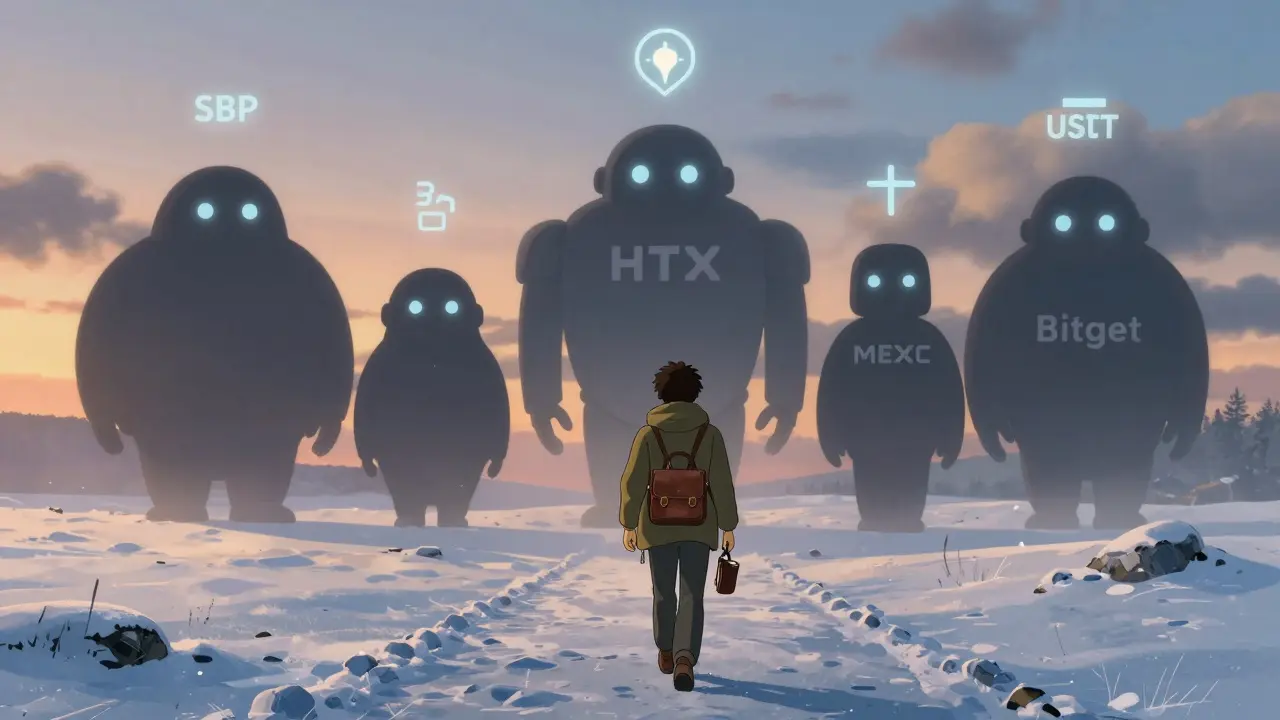
What’s Next for P2P in Russia?
The market is getting smarter. Platforms now offer built-in RUB on-ramps, like Bitget Wallet, which lets you buy crypto directly with a card without leaving the app. More exchanges are adding DeFi integrations-stake, earn, lend-so you’re not just trading, you’re building wealth.
Regulators are watching. The Central Bank of Russia still doesn’t recognize crypto as legal tender. But they’ve stopped trying to ban P2P. Instead, they’re pushing for transparency. Exchanges are now required to collect KYC data, report large transactions, and block suspicious accounts. This isn’t freedom-it’s controlled access. But it’s working.
Future upgrades will include better dispute tools, AI-powered fraud detection, and real-time payment verification. The goal? Make P2P trading as safe as a bank transfer-without the bank.
Final Thoughts
P2P crypto trading in Russia isn’t about bypassing the system. It’s about surviving it. The platforms that made it through the last two years did so by listening to users-not regulators. They built tools for real people, not idealized markets.
If you’re starting out, begin small. Trade with 5,000 rubles first. Learn the payment methods. Check reputations. Watch for red flags. Don’t chase high leverage. Don’t trust strangers. And never, ever skip 2FA.
This isn’t gambling. It’s a new financial layer-one built by users, for users. And right now, in Russia, it’s the only one that works.
Can I still use Binance P2P in Russia?
No. As of late 2025, Binance P2P shows zero activity for Russian ruble (RUB) trading. The platform stopped supporting RUB deposits and withdrawals due to regulatory pressure and compliance issues. Russian users have shifted to alternatives like Bybit, HTX, and MEXC, which still offer full RUB support.
Is P2P crypto trading legal in Russia?
It exists in a legal gray area. The Central Bank of Russia does not recognize cryptocurrency as legal tender and has warned against its use. However, there is no explicit law banning peer-to-peer trading between individuals. As long as users don’t use regulated financial institutions to process crypto payments, enforcement is rare. Most traders operate under the radar using local payment systems like SBP and card transfers.
Why do P2P platforms use color codes for bank cards?
Russian banks block transactions flagged as crypto-related. To avoid triggering fraud alerts, P2P platforms use color-coded labels instead of naming banks directly. Green = Sberbank, Yellow = Tinkoff, Red = MIR, etc. These are community-driven codes, not official terms. Traders rely on them to identify safe payment methods without raising red flags.
Which platform has the lowest fees for P2P trading in Russia?
MEXC offers the lowest fees: 0% maker fees on both spot and futures trading, with taker fees at just 0.02%. Bybit and KuCoin charge 0.1% for spot trades. Bitget offers 0.02% for makers on futures. If you’re a frequent trader, paying with platform tokens (like BGB or MX) can cut fees further.
How can I protect my bank account from being frozen during P2P trades?
Use a separate bank account just for crypto transactions. Avoid your main salary account. Prefer SBP (Fast Payment System) over card transfers, as it’s less likely to trigger alerts. Keep transaction amounts under 100,000 rubles per trade. Never use vague payment descriptions like “crypto” or “Bitcoin.” Always match the buyer’s name with the bank account holder. And never keep large balances in your bank account-withdraw profits regularly.






Sanchita Nahar
February 13, 2026 AT 12:03Gaurav Mathur
February 15, 2026 AT 01:19blake blackner
February 15, 2026 AT 08:05Tammy Chew
February 15, 2026 AT 19:52Andrea Atzori
February 16, 2026 AT 15:19Holly Perkins
February 17, 2026 AT 11:23Benjamin Andrew
February 18, 2026 AT 19:38Lindsey Elliott
February 19, 2026 AT 12:52John Doyle
February 20, 2026 AT 16:51Ekaterina Sergeevna
February 22, 2026 AT 02:53Beth Trittschuh
February 22, 2026 AT 09:08kelvin joseph-kanyin
February 23, 2026 AT 15:59Joe Osowski
February 25, 2026 AT 11:57Jeremy Lim
February 26, 2026 AT 15:45