2000 MW Electricity for Bitcoin: Power, Mining, and the Real Cost
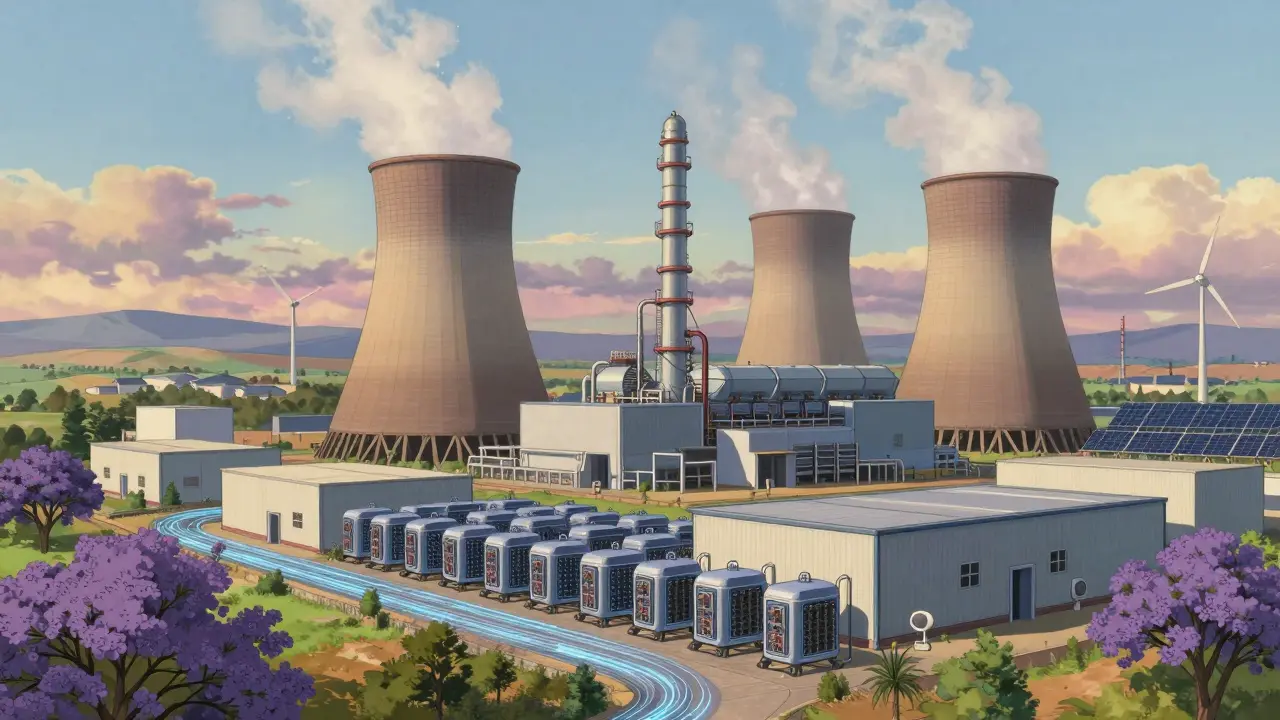
When you hear 2000 MW electricity for Bitcoin, the total power output needed to run Bitcoin mining at a massive scale. Also known as 2 gigawatts, it's enough to power a city like San Francisco or a small country like Iceland for a short time. That’s not a hypothetical—it’s what Bitcoin mining consumes in real time, according to the Cambridge Centre for Alternative Finance. This isn’t about efficiency. It’s about scale. Every time a new Bitcoin block is mined, thousands of machines are racing to solve complex math problems, using electricity like water in a dam.
This process is called Proof of Work, the consensus mechanism that secures Bitcoin by requiring computational effort to validate transactions. It’s the reason Bitcoin hasn’t been hacked in over 15 years—but it’s also why critics call it a power hog. Unlike newer blockchains that use Proof of Stake, Bitcoin doesn’t pick validators based on how much crypto they own. It picks them based on how much electricity they burn. That’s why mining farms cluster in places with cheap, abundant power—like Texas, Kazakhstan, or Paraguay. And that’s why a single mining operation can draw 2000 MW without blinking.
The crypto power consumption, the total electricity used by cryptocurrency networks worldwide, primarily driven by Bitcoin mining isn’t just about Bitcoin. But Bitcoin makes up over half of it. Every 2000 MW you hear about? That’s roughly 17.5 million homes running nonstop. Some say it’s wasteful. Others say it’s the price of decentralization. Either way, it’s real. And it’s growing. As Bitcoin’s price rises, more miners join. As more miners join, the network gets harder. And as it gets harder, it needs more power. It’s a loop that doesn’t slow down.
What’s often missing in this conversation is context. Coal plants in China? Shut down. Solar farms in Texas? Built for this. Bitcoin mining isn’t just consuming power—it’s helping absorb surplus energy, turning stranded gas into electricity, and keeping grids stable during off-peak hours. Some mining rigs even turn off when the grid is stressed, acting like a shock absorber. That’s not something you hear on the news. But it’s happening.
So when someone says Bitcoin uses too much electricity, ask: compared to what? The global banking system? Gold mining? The internet itself? Those systems use more. But they don’t show their numbers. Bitcoin does. That’s why you see these stats—2000 MW, 100 TWh, 0.5% of global power. They’re not hidden. They’re public. And they’re part of the trade-off.
Below, you’ll find deep dives into how mining actually works, why it’s so energy-heavy, what alternatives exist, and which crypto projects are quietly changing the game. Some posts will show you scams hiding behind fake energy claims. Others will break down real data from mining farms. You won’t find fluff. Just facts, tools, and the truth behind the noise.