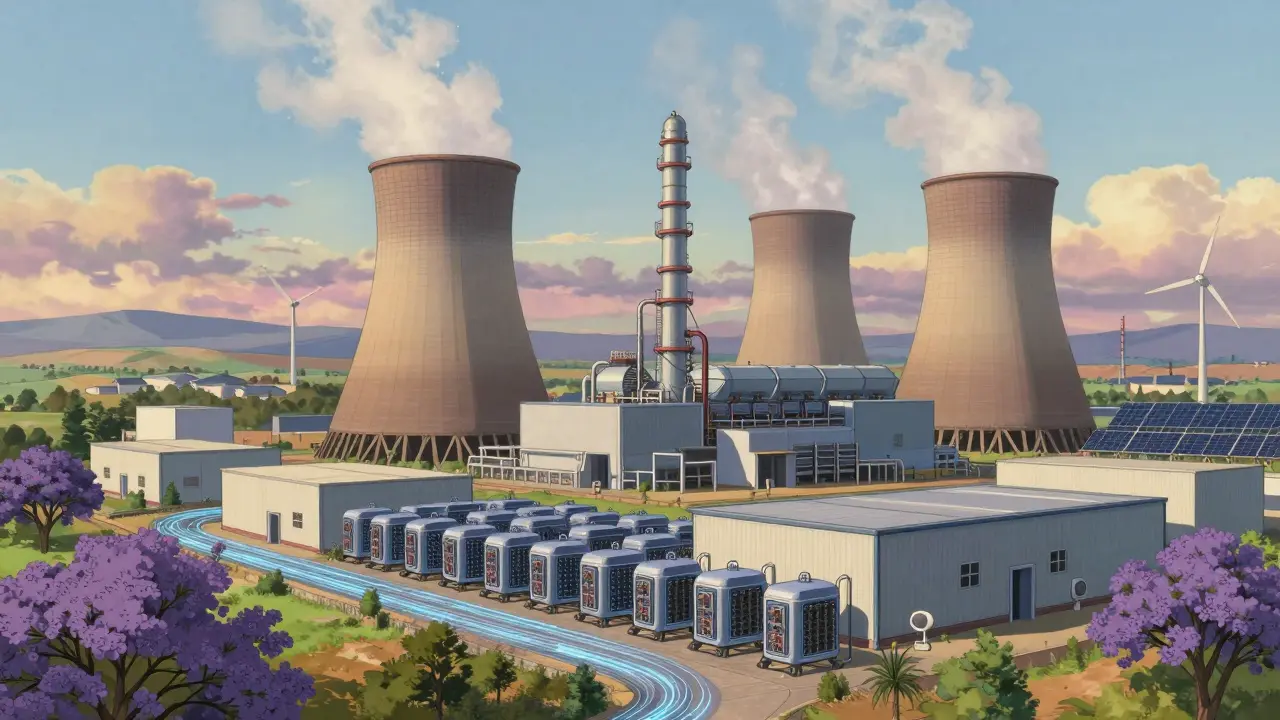
Pakistan crypto mining: What’s really happening and why it matters
When you hear Pakistan crypto mining, the unofficial but widespread practice of using electricity to validate blockchain transactions in Pakistan. Also known as crypto mining in Pakistan, it’s not a government-backed industry—it’s a grassroots hustle driven by cheap power and desperation. While the State Bank of Pakistan banned crypto trading in 2018, mining slipped through the cracks. No laws specifically outlawed running rigs in basements or warehouses. So people did. And they kept doing it—even as electricity bills rose and blackouts grew longer.
What makes Pakistan crypto mining unique isn’t just the lack of rules—it’s the energy grid, the unstable power system that both enables and undermines mining operations. Many miners rely on subsidized or illegally tapped electricity, often from the same lines that power homes in rural areas. A single mining rig can pull as much power as a small neighborhood. This isn’t just about profit—it’s about survival. When inflation hits 30% and the rupee keeps falling, mining Bitcoin or Ethereum becomes a way to store value outside the broken system. But it’s also why the government keeps threatening crackdowns. They can’t afford to let this drain the grid, yet they can’t fully stop it without sparking public backlash.
Then there’s the crypto regulation Pakistan, the confusing, shifting legal gray zone that leaves miners in constant uncertainty. Unlike Iraq, which banned mining outright in 2017, Pakistan never made a clear move. No licenses. No taxes. No enforcement. That’s not freedom—it’s neglect. Miners operate like ghosts: no registration, no oversight, no protection. One day, a local official might turn a blind eye. The next, a power company might cut the entire block. And when the lights go out, so does the mining. It’s a high-risk game played with no safety net.
What you’ll find in the posts below isn’t just about Pakistan. It’s about how crypto mining works under pressure—whether it’s the Proof of Work system that eats electricity, the flash loan attacks, a type of exploit that can wipe out DeFi projects in seconds, or how countries like Bolivia and Iraq have tried—and failed—to control digital money. These stories show that mining isn’t just a tech issue. It’s a power issue. A money issue. A survival issue. And in Pakistan, it’s happening right now, in garages, on rooftops, and behind locked doors. You won’t find official stats. But you’ll find the truth in the noise.