

Have you seen the buzz about the VIRVIA an alleged cryptocurrency project promising free tokens through online shopping activities? If someone told you that simply buying items on "VIRVIA ONLINE SHOPPING" would earn you guaranteed VDV tokens, stop right there. This is not an opportunity; it is a trap.
As of June 2026, extensive investigations by blockchain security firms and law enforcement agencies have confirmed that the VIRVIA operation is a sophisticated phishing scam. There is no legitimate token, no valid blockchain contract, and no real company behind this name. The entire setup was designed to steal your cryptocurrency wallet credentials and personal data.
The Reality Behind the VIRVIA (VDV) Claim
To understand why this is dangerous, we need to look at what actually happened. In late 2025, a surge of reports emerged regarding a platform called "VIRVIA ONLINE SHOPPING." The premise was simple but enticing: shop for goods, and receive crypto rewards in the form of VDV tokens. It sounded like a win-win-free money for spending you were already going to do.
However, when experts dug deeper, they found nothing. There are zero mentions of VIRVIA or VDV on major cryptocurrency tracking platforms like CoinGecko or CoinMarketCap. Legitimate projects preparing for an airdrop always have a digital footprint: whitepapers, active developer repositories on GitHub, verified social media accounts, and listings on aggregator sites. VIRVIA had none of these.
Instead, what existed was a cloned website. Security analysis revealed that the domain virvia.online was registered using privacy services to hide the owner's identity. The site used a modified Shopify template, but with malicious JavaScript code injected into the backend. This code wasn't designed to process orders; it was designed to harvest wallet seed phrases and private keys when users connected their wallets to "claim" their rewards.
| Feature | Legitimate Crypto Project | VIRVIA (VDV) |
|---|---|---|
| Blockchain Contract | Verified on Etherscan/Solscan | No contract exists |
| Domain Age | Usually established (months/years) | Registered Sept 2025 (very new) |
| Verification Method | Wallet address connection only | Requests seed phrase/private key |
| Tracking Platforms | Listed on CoinGecko/Airdrops.io | Not listed anywhere |
| Promises | Retroactive rewards for usage | Guaranteed tokens for minimal activity |
How the VIRVIA Phishing Attack Works
Scammers rely on greed and confusion. The VIRVIA operation followed a classic phishing playbook that has been documented by the Federal Trade Commission (FTC) and blockchain forensics firm Elliptic. Here is the step-by-step mechanism:
- The Hook: Victims encounter ads or social media posts claiming that VIRVIA is launching a revolutionary "Shop-to-Earn" model. They promise high-value VDV tokens for small purchases.
- The Fake Storefront: Users visit a website that looks professional. It mimics legitimate e-commerce platforms, complete with product images and checkout flows. However, the SSL certificate lacks organizational validation, meaning the business entity is unverified.
- The Wallet Connection: To "register" or "claim" the airdrop, users are asked to connect their Web3 wallet (like MetaMask or Phantom). This is standard for many dApps, so users often lower their guard.
- The Data Harvest: Once connected, the malicious script triggers. It may prompt the user to sign a transaction that appears harmless but actually grants the attacker unlimited spending access. Worse, some variants trick users into pasting their seed phrase under the guise of "security verification."
- The Drain: Within minutes, attackers drain the victim's ETH, SOL, or other assets. By the time the victim realizes the loss, the funds have been laundered through mixers like Tornado Cash.
According to Chainalysis' 2025 Mid-Year Crypto Crime Report, fake e-commerce airdrops accounted for 31% of all airdrop-related fraud. The average victim lost $785. VIRVIA fits this pattern perfectly. Reports from Reddit’s r/CryptoAirdrops community indicated that victims of the VIRVIA scam lost an average of $850 after connecting their wallets.
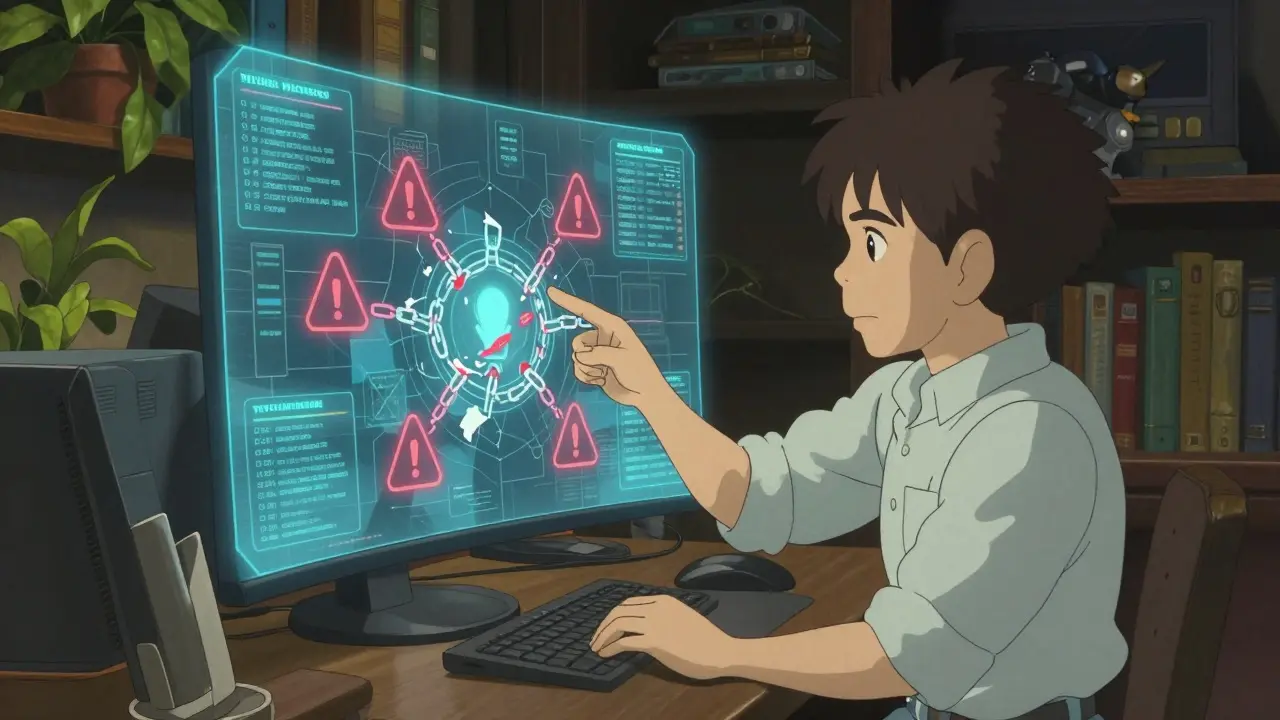
Red Flags You Should Never Ignore
You don't need to be a blockchain expert to spot a scam. There are clear warning signs that distinguish legitimate opportunities from fraudulent ones. If you see any of these, walk away immediately.
- "Guaranteed" Returns: Legitimate crypto projects never guarantee profits or token values. Markets are volatile. Promises of "guaranteed VDV tokens" are a hallmark of fraud.
- New Domains: Check the domain age. If a site claims to be a major shopping platform but its domain was registered last month, it is suspicious. VIRVIA's domain was created in September 2025, just weeks before the scam peaked.
- Requests for Seed Phrases: No legitimate service will ever ask for your 12-24 word seed phrase or private key. Your seed phrase is the master key to your vault. Keep it offline.
- Absence of Whitepaper: Real projects publish technical documentation explaining how their tokenomics work. VIRVIA had no whitepaper, no team page, and no legal disclaimers.
- Pressure to Act Fast: Scams create urgency. "Claim now before slots run out!" is a tactic to make you skip due diligence.
What Happened to VIRVIA?
By October 2025, the VIRVIA operation was flagged as a confirmed scam by multiple authorities. The FBI's Internet Crime Complaint Center (IC3) issued Public Service Announcement #2025-098, listing VIRVIA among active cryptocurrency shopping scams. Blockchain analytics firm Nansen confirmed that there was no credible funding, developer activity, or community growth associated with the name.
The scammers attempted to evade takedowns by migrating domains twice-from virvia.shop to virvia.online. However, security firms tracked the wallet addresses linked to the operation. Elliptic reported that VIRVIA-linked wallets had laundered approximately 18.7 ETH (valued at over $62,000 at the time) before major exchanges froze the collection addresses.
Despite these efforts, the operators likely disappeared and relaunched under a new brand. This is common behavior. As Dr. Hannah Kim, a blockchain security expert, noted, such operations typically vanish after extracting maximum value, only to reappear with a different name but the same malicious code structure.

How to Verify Legitimate Airdrops
While VIRVIA was a scam, legitimate airdrops do exist. Projects like Monad, Hyperliquid, and Abstract have successfully distributed tokens to early users. How can you tell the difference? Follow this checklist.
- Check Reputable Aggregators: Use sites like CoinGecko, CoinMarketCap, or airdrops.io. If a project isn't listed there, it doesn't exist in the mainstream market.
- Verify Smart Contracts: Go to Etherscan (for Ethereum) or Solscan (for Solana). Search for the token name. If no contract is found, or if the contract is unaudited and new, stay away.
- Review Social Proof: Look at Twitter (X), Discord, and Telegram. Are there real people discussing technical details? Or is it just bots posting "To the moon!"? Legitimate communities have nuanced discussions.
- Look for Audits: Serious projects hire firms like CertiK, Halborn, or Consensys Diligence to audit their code. These audits are public documents.
- Never Share Private Keys: Repeat this until it sticks. Your private key is yours alone. Never enter it into a website.
Protecting Yourself in 2026
The landscape of crypto scams evolves rapidly. With the rise of AI-generated websites and deepfake videos, scams look more convincing than ever. Here are proactive steps to secure your assets.
Use a Hardware Wallet: Devices like Ledger or Trezor keep your private keys offline. Even if you click a malicious link, the attacker cannot access your funds without physical confirmation on the device.
Enable Domain Watchlists: Some browser extensions can alert you if you visit a known phishing domain. Keep these tools updated.
Educate Yourself: Follow security-focused newsletters and channels. Understanding the mechanics of phishing makes you less susceptible to emotional manipulation.
If you have already interacted with the VIRVIA site, take immediate action. Disconnect your wallet, revoke any approvals granted to unknown contracts using tools like Revoke.cash, and if you entered your seed phrase, assume those funds are compromised. Move remaining assets to a new wallet generated with a fresh seed phrase.
Is the VIRVIA (VDV) token real?
No. The VIRVIA (VDV) token does not exist on any blockchain. It was part of a phishing scam designed to steal wallet credentials. There is no smart contract for VDV on Ethereum, Solana, or other major networks.
Did VIRVIA ONLINE SHOPPING hack my wallet?
If you connected your wallet to the VIRVIA site, you may have granted unauthorized access to your funds. If you entered your seed phrase, your wallet is definitely compromised. Immediately move your assets to a new wallet and revoke permissions.
Can I claim VIRVIA tokens now?
No. Any website currently claiming to offer VIRVIA or VDV tokens is likely a secondary scam targeting people who heard about the original fraud. Do not engage with any such sites.
How do I know if a crypto airdrop is legitimate?
Legitimate airdrops are listed on major tracking sites like CoinGecko, have verified smart contracts on block explorers, and never ask for your seed phrase. They also usually require interaction with a testnet or mainnet protocol, not just shopping.
What should I do if I lost money to VIRVIA?
Report the incident to the FBI IC3 and your local authorities. While recovery is difficult, reporting helps track criminal patterns. Secure your remaining assets by creating a new wallet and revoking old approvals.
Why did VIRVIA use a shopping platform model?
Scammers use familiar concepts like online shopping to lower victims' defenses. The promise of earning crypto for everyday purchases appeals to a broad audience, making it easier to cast a wide net for phishing attacks.




JEVON HALL
June 6, 2026 AT 10:31bro this is why i always use a burner wallet for any new dApp interaction 🛡️
i learned my lesson the hard way with that whole 'free solana' scam last year. never ever connect your main vault to some random site asking for seed phrases. it's literally begging to get drained 💀
Erik Kirana
June 7, 2026 AT 03:54The sheer incompetence of these retail investors is staggering. One would think after years of warnings, people would develop basic digital hygiene. Yet here we are, watching them hand over their private keys like they are discount coupons at a grocery store. It is pathetic and frankly insulting to those who actually understand blockchain security protocols.
dan kaffeman
June 8, 2026 AT 21:30Another day another scam targeting the gullible masses. Honestly, if you fall for something like VIRVIA, you deserve to lose your money. The crypto space needs more predators to weed out the weak links. Survival of the fittest, folks. Stop whining about being hacked when you can't even read a URL properly.
Dr Lynea LaVoy
June 10, 2026 AT 20:28I appreciate the detailed breakdown in this post. As someone who helps friends navigate Web3, I see too many people get excited by 'guaranteed returns.'
Please remember: if it sounds too good to be true, it almost certainly is. Always verify contracts on Etherscan or Solscan before connecting anything. And please, for the love of god, never share your seed phrase. Not with support staff, not with websites, not with anyone.
Meg Gran
June 12, 2026 AT 07:00its obvious that most ppl just dont care about security until its too late. the whole virvia thing was such a classic phishing setup but still managed to drain so much eth. typical human behavior really. greed blinds everyone eventually i suppose.
Alexis Abster
June 14, 2026 AT 05:25This is absolutely terrifying! 😱 I had no idea there were so many fake shopping sites out there right now. I almost clicked on an ad for something similar yesterday! Thank goodness I saw this warning first. We really need to be so much more careful online!
Lee Paige
June 14, 2026 AT 15:26It is no coincidence that these scams proliferate during times of market volatility. The authorities are likely aware of the operators but choose to ignore them because the laundered funds often end up back into the system through shell companies. This is a systemic issue designed to siphon wealth from the uninformed public while the elite manipulate the underlying protocols. Do not trust the official narratives.
Matthew Malone
June 15, 2026 AT 11:12Typical American naivety. You people jump at every shiny object without doing due diligence. Meanwhile, the rest of the world knows better than to engage with unverified entities. But sure, keep complaining about scammers instead of learning how to protect yourselves. It’s embarrassing to watch.
aaliyah zahid
June 17, 2026 AT 10:23Sarcasm aside, Matthew has a point about due diligence, though his delivery is less than helpful. Let’s focus on the solution rather than blaming the victims. Many of us are still learning how this technology works. Instead of mocking, let’s share resources on how to spot these red flags early.
Alexander DeVries
June 18, 2026 AT 12:50Stay strong everyone. The crypto journey is tough but knowledge is power. Use hardware wallets. Enable 2FA. Verify everything. You got this. Don’t let the scammers win by making you paranoid. Just be smart and stay safe.
Steven Jacobowitz
June 19, 2026 AT 17:02Why does nobody talk about the technical implementation of the malicious JS? It’s not just social engineering; it’s sophisticated code injection. If you’re a dev, check your dependencies. If you’re a user, assume every dApp connection request is potentially hostile until proven otherwise via audit reports.
Kelly Tenney
June 20, 2026 AT 12:36I’m so glad this information is out there. It’s scary how easy it is to look professional these days with AI tools. I always tell my community to double-check domain ages. If a site is brand new but claims to be huge, run away fast. Stay safe out there everyone!
Yogendra Dwivedi
June 22, 2026 AT 12:26Very informative post. In India, we also see many such phishing attempts targeting users unfamiliar with blockchain. Education is key. Please share this with your family members who might be tempted by 'easy money' schemes. Prevention is better than cure.
Sylvia Mossman
June 23, 2026 AT 13:58You know what? Maybe the problem isn't the scammers, maybe it's the regulators who allow these domains to exist for months before taking action. Why do we have to rely on Reddit threads to warn us about known crimes? The system is broken and pretending otherwise is useless.
Brad Ranks
June 23, 2026 AT 14:39I lost $200 to a similar scam last month. Thought it was a legit NFT drop. Felt stupid for weeks. Now I use a separate wallet for risky stuff. Wish I knew this sooner.
Caitlin Donahue
June 25, 2026 AT 02:49hey guys just wanted to say thanks for the tips. im gonna go revoke my approvals right now. feels weird but better safe than sorry right lol. hope everyone stays safe!
Greg Lewis
June 25, 2026 AT 15:15the nature of value is subjective yet we treat digital tokens as absolute truth. perhaps the real scam is the belief in centralized control itself. virvia is merely a symptom of a larger existential crisis in our financial systems. wake up sheeple.
Mark Corpuz
June 26, 2026 AT 17:16The table comparing legitimate airdrops versus the VIRVIA scam is particularly useful. It provides a clear, concise checklist for verification. I will be bookmarking this page for future reference when evaluating new projects. Thorough research remains the only viable defense against such fraudulent activities.