
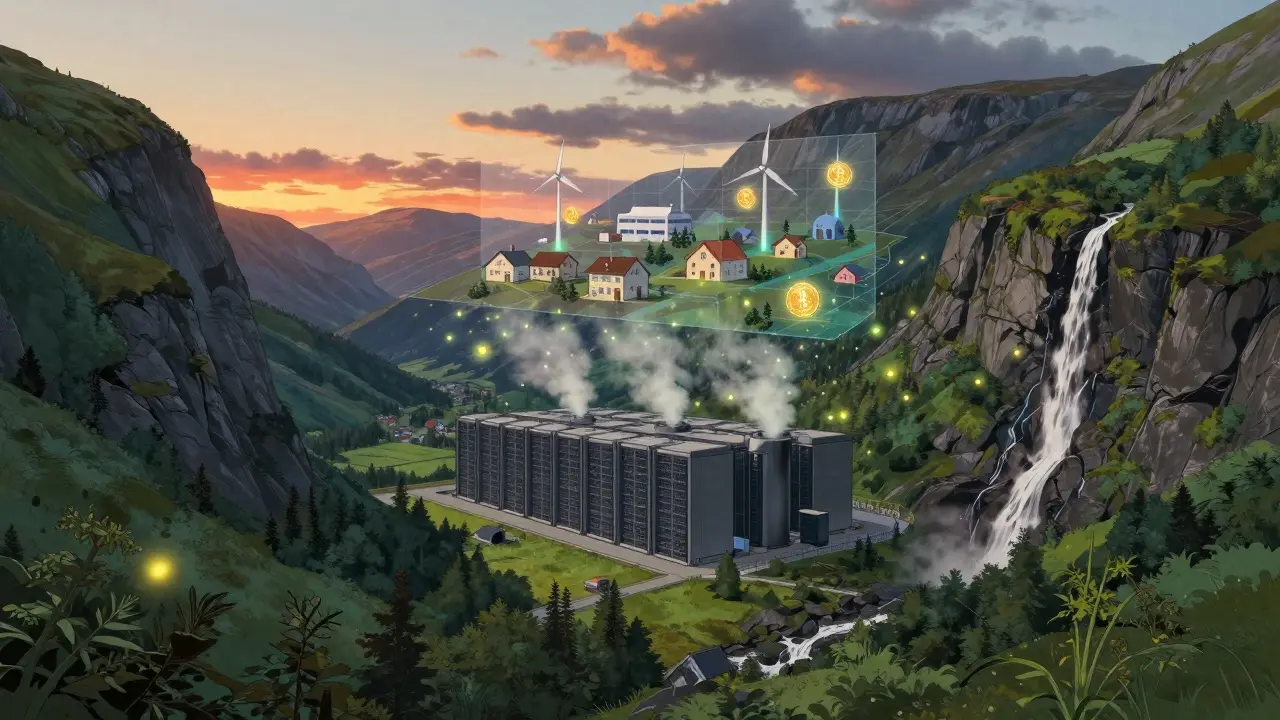
Norway, a country known for its clean hydroelectric power and high standard of living, is taking a bold step to protect its energy future. In June 2025, the Labour Party government announced plans to block new cryptocurrency mining data centers from opening in the country. The ban isn’t about banning Bitcoin or crypto itself-it’s about saying no to using Norway’s precious renewable electricity for operations that bring little local benefit.
Why Norway Is Acting Now
Norway generates over 90% of its electricity from hydropower. That’s one of the cleanest sources of energy in the world. For years, this made it a magnet for cryptocurrency miners looking for cheap, green power. Bitcoin mining, in particular, eats up massive amounts of electricity. A single large mining facility can use as much power as a small town. The government didn’t stop mining because it’s bad for the environment-though that’s part of it. The real issue is opportunity cost. Every megawatt used to mine Bitcoin is a megawatt that can’t be used to power a factory, a hospital, a school, or a home. Norwegian officials say crypto mining creates almost no local jobs, pays minimal taxes, and doesn’t help build the economy. Meanwhile, industries like aluminum smelting, data processing for healthcare, and green hydrogen production do. Minister for Digitalization and Public Administration Karianne Tung put it plainly: “The mining of cryptocurrency is very power-intensive and generates little in the way of jobs and income for the local community.”The Ban Isn’t Total-It’s Targeted
This isn’t a full ban. Existing crypto mining operations can keep running. The rule only stops new ones from being built. That’s a key detail. It gives the government time to see how much energy mining is actually using before making permanent decisions. To track this, Norway introduced new rules in early 2025 requiring all data centers that mine crypto to register with authorities. This gave officials a clear picture: by mid-2025, over 1.2 terawatt-hours of electricity were being used by crypto miners annually-enough to power 200,000 homes. That’s a 30% increase from just two years earlier. The government says it can enforce this under the Planning and Building Act, which lets it control how energy and land are used. No new permits for crypto mining facilities will be issued starting in autumn 2025. The timing was chosen to align with the end of their energy audit and the start of the next fiscal planning cycle.How This Compares to Other Countries
Norway isn’t alone in cracking down. China banned all crypto mining in 2021, forcing miners to flee to the U.S., Kazakhstan, and Russia. Russia banned mining in 10 regions in January 2025 to prevent blackouts. Kosovo shut it down in 2022 after energy shortages led to daily power cuts. But Norway’s approach is different. It’s not about fear of instability. It’s about smart resource use. New York State banned crypto mining powered by fossil fuels in 2022-but allowed it if 100% renewable. Norway doesn’t even make that exception. Even clean energy is too valuable to waste on mining. Iceland, another country with cheap renewable power, is watching closely. If Norway’s ban works, Iceland might follow. Canada’s Quebec province has already slowed new mining projects by raising electricity rates for large users. The message is clear: if you’re not creating local value, you don’t get priority access to public resources.
What This Means for Miners
If you’re already mining in Norway, you’re fine-for now. But if you’re thinking about setting up shop there, the door is closing. The government won’t stop you from running a small rig at home, but large-scale mining operations? No new permits. No new land. No new power contracts. Some miners argue that crypto mining drives investment in renewable infrastructure. They say mining companies build new dams or wind farms to power their operations. But Norwegian officials aren’t convinced. They point out that Norway already has more than enough renewable capacity. The country doesn’t need more dams. It needs better use of what it already has. The government’s stance is simple: if you want to mine crypto, go somewhere with excess energy. Not here.What’s Next for Norway?
The ban is temporary. Officials say they’ll review it in two years. If mining becomes more energy-efficient-say, if new ASIC chips cut power use by 50%-they might reconsider. If the industry starts paying meaningful taxes or creates local jobs, they might open the door again. For now, Norway is betting on the future. They’re choosing to use their clean energy to build industries that last: green steel, battery production, AI data centers for public services, and research labs. These create skilled jobs, attract talent, and keep wealth in the country. It’s not anti-crypto. It’s pro-Norway.
What This Means for the Global Crypto Industry
Norway’s move sends a signal to the entire crypto world: being green isn’t enough. If your operation doesn’t benefit the local community, you won’t be welcome-even in the most renewable-friendly places. This could shift where mining happens. Miners may now look to places like Canada’s Alberta province, where natural gas is abundant and cheap, or to the U.S. South, where coal plants are being repurposed. Some may even turn to stranded energy sources-like flare gas from oil fields-that would otherwise be wasted. But the trend is clear. Governments are no longer just taxing crypto. They’re controlling who gets access to energy. And that’s a bigger deal than any regulation on exchanges or wallets.What About Bitcoin and Other Cryptocurrencies in Norway?
Don’t get confused. Buying, selling, and holding Bitcoin is still completely legal in Norway. You can trade it on local exchanges. You pay capital gains tax on profits. Exchanges must follow anti-money laundering rules. The government doesn’t want to ban crypto-it just doesn’t want it sucking up the country’s electricity. The ban targets infrastructure, not individuals. If you mine a few coins on your home PC, you’re not breaking any rules. But if you’re building a warehouse full of rigs, you’ll need to look elsewhere.Will Other Countries Follow?
Yes. Already, Sweden is reviewing its energy allocation policies. Finland is studying Norway’s registration system. The European Union is drafting new guidelines on energy use for digital assets. This isn’t just about Norway. It’s about a new global standard: energy isn’t free just because it’s renewable. It’s a public resource. And governments are starting to treat it that way. The days of crypto mining as a free pass to use any power you want are ending. The winners will be those who build real value-not just digital ledgers.Is crypto mining banned in Norway?
No, crypto mining is not fully banned. Norway is only blocking new mining data centers from opening. Existing operations can continue running. The ban targets infrastructure, not individuals or small-scale miners.
Why is Norway banning crypto mining if it uses renewable energy?
Even though Norway’s electricity is mostly renewable, the government says the energy is too valuable to waste on mining. Crypto mining creates almost no local jobs or tax revenue, while industries like green manufacturing and healthcare need that power. It’s about prioritizing who gets access to public resources.
Can I still buy or trade Bitcoin in Norway?
Yes. Buying, selling, and holding Bitcoin and other cryptocurrencies is fully legal in Norway. You must pay capital gains tax on profits, and exchanges must follow anti-money laundering rules. The ban only affects new mining facilities, not trading or ownership.
When does the ban take effect?
The ban was set to take effect in autumn 2025. As of December 2025, it has been implemented. New permits for cryptocurrency mining data centers are no longer being issued.
Is this ban permanent?
No. The ban is temporary and will be reviewed in two years. If mining technology becomes much more energy-efficient, or if the industry starts contributing more to the local economy, the government may lift or modify the restrictions.
What happens to miners already operating in Norway?
Existing mining operations are allowed to continue. They must still register with authorities and comply with energy reporting rules. But they cannot expand their power usage or build new facilities without approval.
How much energy does crypto mining use in Norway?
In 2025, crypto mining consumed over 1.2 terawatt-hours of electricity-enough to power 200,000 homes. That’s a 30% increase since 2023. The government says this energy could support much more valuable industries.
Does Norway have any other crypto regulations?
Yes. Digital assets are legal to own and trade. Gains are taxed as capital income. Exchanges must register and follow anti-money laundering rules. Mining is the only activity being restricted, and only for large-scale operations.





Daniel Verreault
December 29, 2025 AT 19:12Jacky Baltes
December 31, 2025 AT 01:03Haritha Kusal
January 1, 2026 AT 09:47Mike Reynolds
January 1, 2026 AT 14:46dayna prest
January 2, 2026 AT 04:29Brooklyn Servin
January 2, 2026 AT 23:32Phil McGinnis
January 3, 2026 AT 09:58Rick Hengehold
January 3, 2026 AT 18:31Brandon Woodard
January 5, 2026 AT 17:33Ryan Husain
January 6, 2026 AT 20:10nayan keshari
January 8, 2026 AT 14:11Monty Burn
January 8, 2026 AT 22:20Kenneth Mclaren
January 10, 2026 AT 14:26